
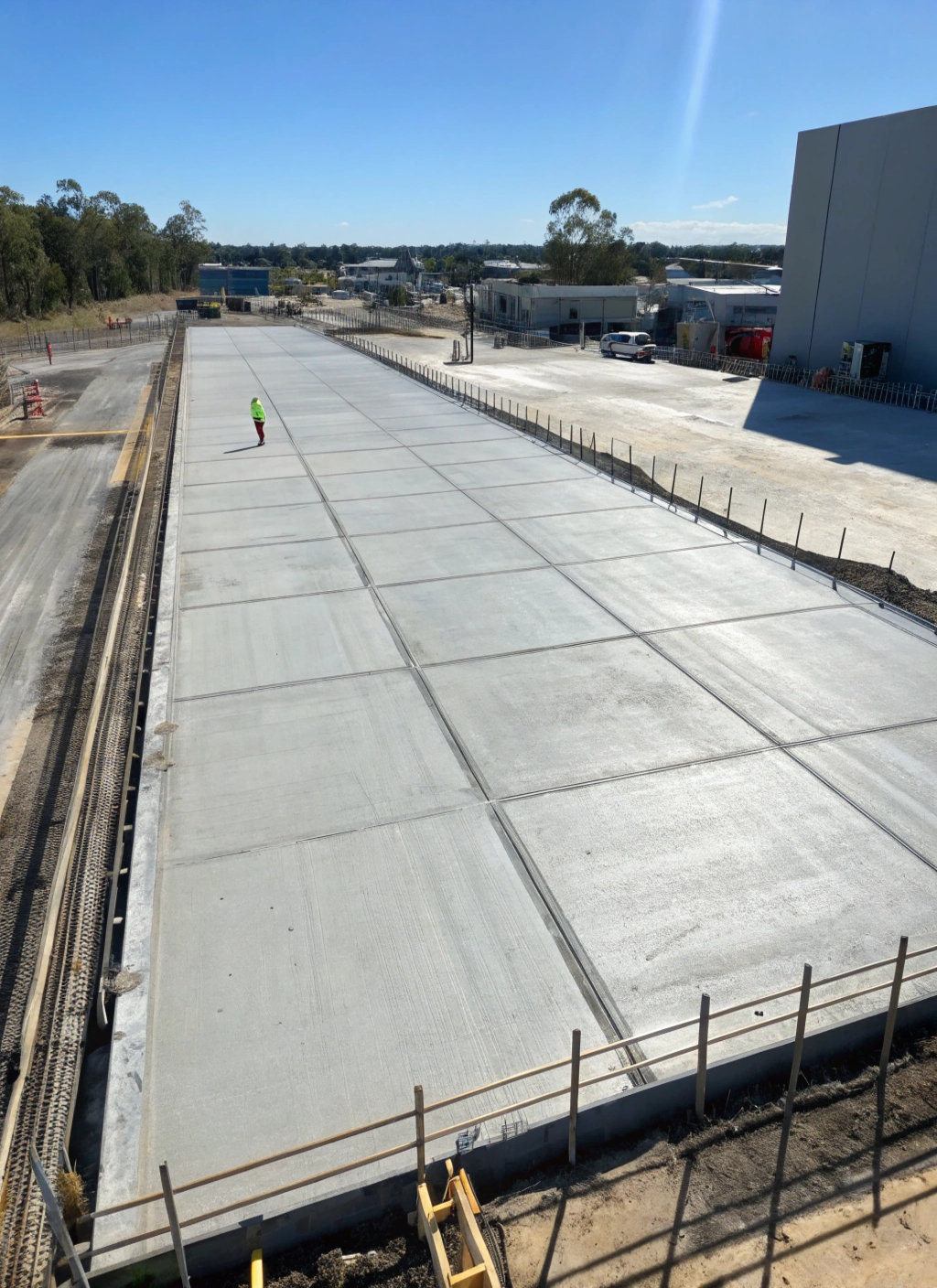
What Is Involved in Pouring a House Slab in Queensland?
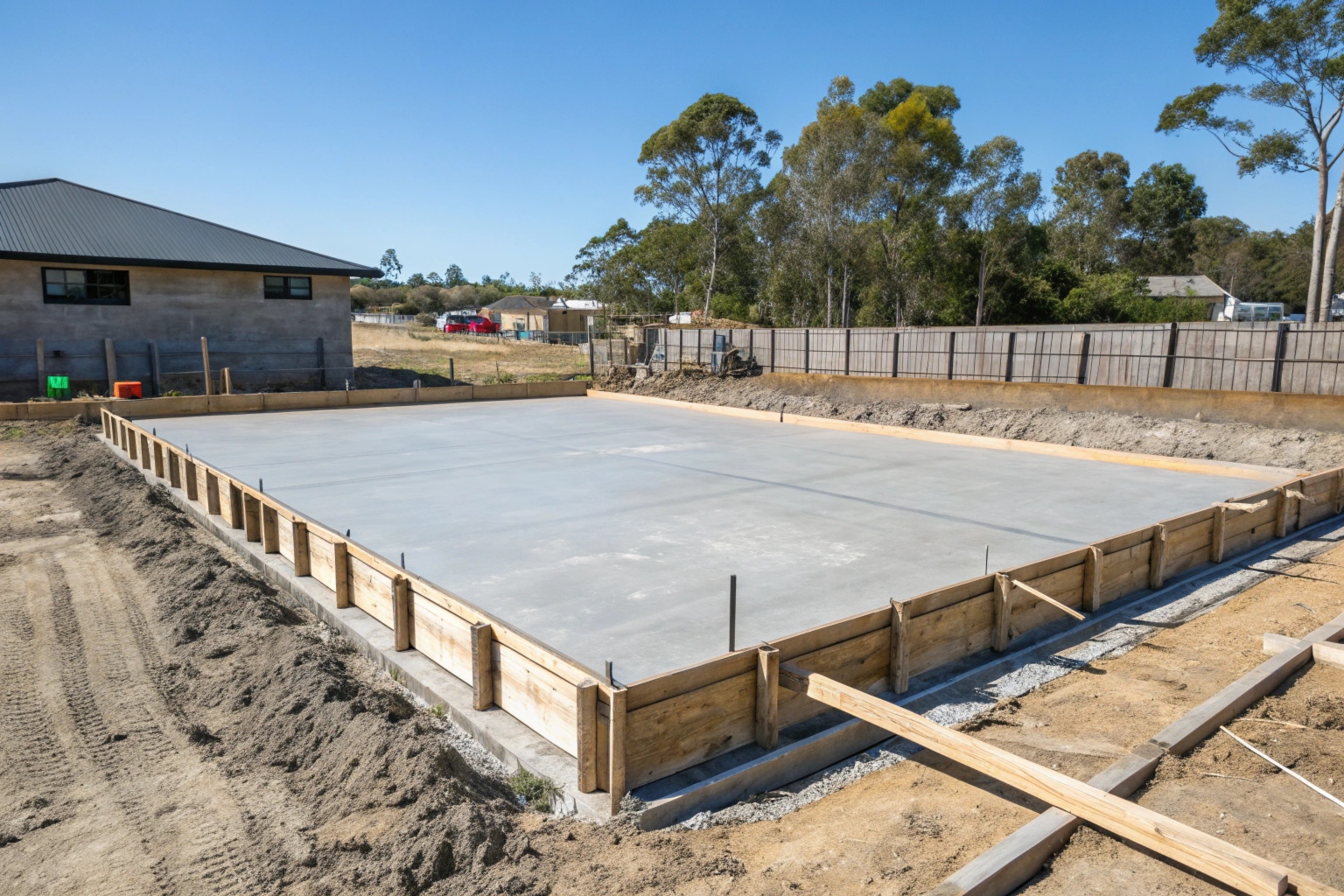
A house slab in Queensland is an engineered concrete foundation poured in a single stage, designed to suit the specific soil conditions and structural requirements of the site. For a house slab Hervey Bay construction to meet Queensland building standards, the following stages must be completed in sequence:
- Geotechnical assessment and soil classification
- Engineer documentation and slab design
- Site preparation and bulk earthworks
- Subbase compaction
- Termite management system installation
- Vapour barrier installation
- Reinforcement placement to engineer specification
- Formwork — edge beams and internal beams
- Concrete pour, pump delivery, finishing and curing
Queensland building regulations require a mandatory pre-pour inspection hold point — reinforcement and formwork must be inspected and approved by a building certifier before a single cubic metre of concrete is placed.

Why the House Slab Sets the Tolerance for Your Entire Build
Every trade that comes after the slab — framers, tilers, cabinet makers, flooring contractors — works from the reference point your slab establishes. If that reference point is off, every trade inherits the problem.
A slab that’s out of level creates frame issues. A slab with surface variation causes problems at tiling and flooring stage. Edge beams that aren’t formed accurately affect wall placement. These aren’t minor inconveniences — they’re costly rectification items that eat into your contingency budget and push your program out.
For owner-builders, getting this stage right carries extra weight. You’re coordinating trades, managing approvals, and watching every dollar. A slab that passes pre-pour inspection first time, pours cleanly, and cures flat means every trade that follows you can get straight to work.
Precision at slab stage doesn’t just protect the concrete — it protects every dollar you spend from frame stage onwards.
Queensland Soil Classification and What It Means for Your Slab Design
Soil Classes A Through P — What Each Means for Fraser Coast Sites
Queensland uses a soil classification system that runs from Class A through to Class P. The class assigned to your site directly determines how your slab is designed, how much reinforcement goes in, and how it’s built.
| Soil Class | Description | Typical Site Behaviour |
|---|---|---|
| A | Stable, non-reactive | Sand, rock — minimal movement |
| S | Slightly reactive | Minor surface movement in dry/wet cycles |
| M | Moderately reactive | Moderate movement — common in clay-rich soils |
| H1/H2 | Highly reactive | Significant movement — expansive clay soils |
| E | Extremely reactive | Severe ground movement |
| P | Problem site | Fill, soft soil, unstable ground — requires individual engineering |
The Role of the Geotechnical Report in Your Slab Design
A geotechnical report classifies the soil on your site and gives the structural engineer the information needed to design a slab that suits those exact conditions. Without it, there’s no slab design.
The House Slab Construction Sequence — Stage by Stage
Site Preparation, Bulk Earthworks and Subbase Compaction
Site clearing, bulk earthworks, and subbase compaction set the condition everything above depends on. Sandy coastal soils across Hervey Bay can move under load if not properly compacted — a leading cause of slab cracking after the pour.
Termite Management Systems — What’s Required Before the Pour
Termite management is mandatory for all new residential construction in Queensland. Physical and chemical barriers are installed at slab stage, fully documented, and inspected by your building certifier before concrete is placed.
Vapour Barrier, Reinforcement and Formwork
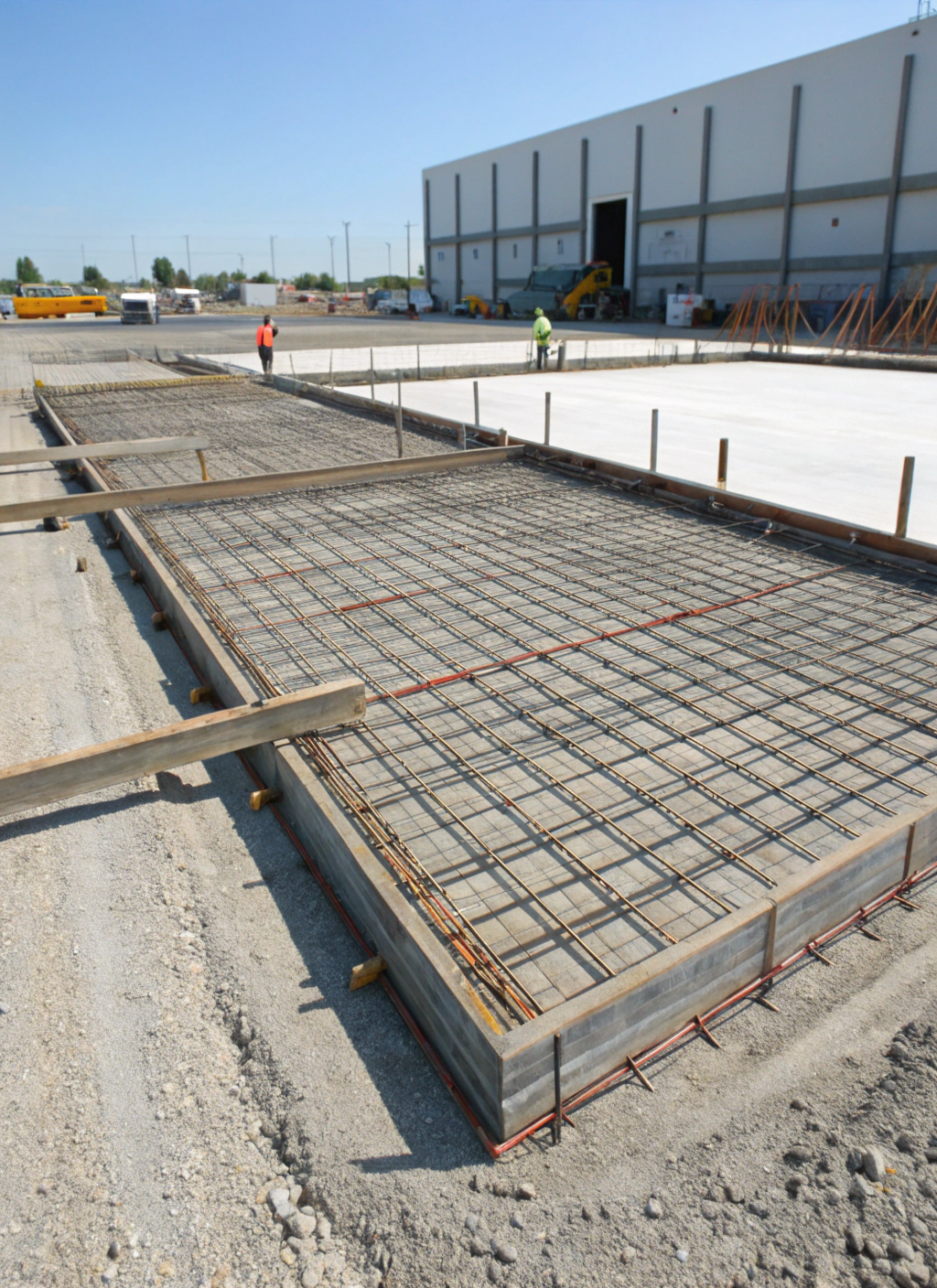
A vapour barrier stops ground moisture migrating up through the slab. Reinforcement is placed to the engineer’s design — correct steel sizes, spacing, and cover maintained throughout. Edge beams and internal beams are formed to documented dimensions.
Concrete Mix, Pump Delivery, Finishing and Curing
The mix suits both structural requirements and Fraser Coast coastal exposure conditions. Most house slabs are pump delivered for accuracy. Concrete is screeded flat and cured carefully — Queensland’s heat makes curing critical to avoid surface cracking.
Engineer-Designed Slabs — Why Documentation Matters on a Queensland Build
In Queensland, a house slab can’t be built to guesswork. A structural engineer designs the slab to suit the specific soil classification, site conditions, and load requirements of your project — and that design is documented before work begins.
Engineer documentation covers slab thickness, reinforcement layout, beam depths, and concrete strength requirements. This is what your building certifier assesses as part of the approval process. Without it, there’s no approval and there’s no pour.
For owner-builders, the engineer’s documentation is your protection — it establishes exactly what was designed and what the contractor built to. For licensed builders, it keeps your project compliant and your certifier relationship straightforward.
Engineer-designed slabs aren’t an upgrade — they’re the standard on every house slab construction project we take on.
Building Approvals and Hold Point Inspections for House Slabs in Queensland
What Happens at a Pre-Pour Inspection
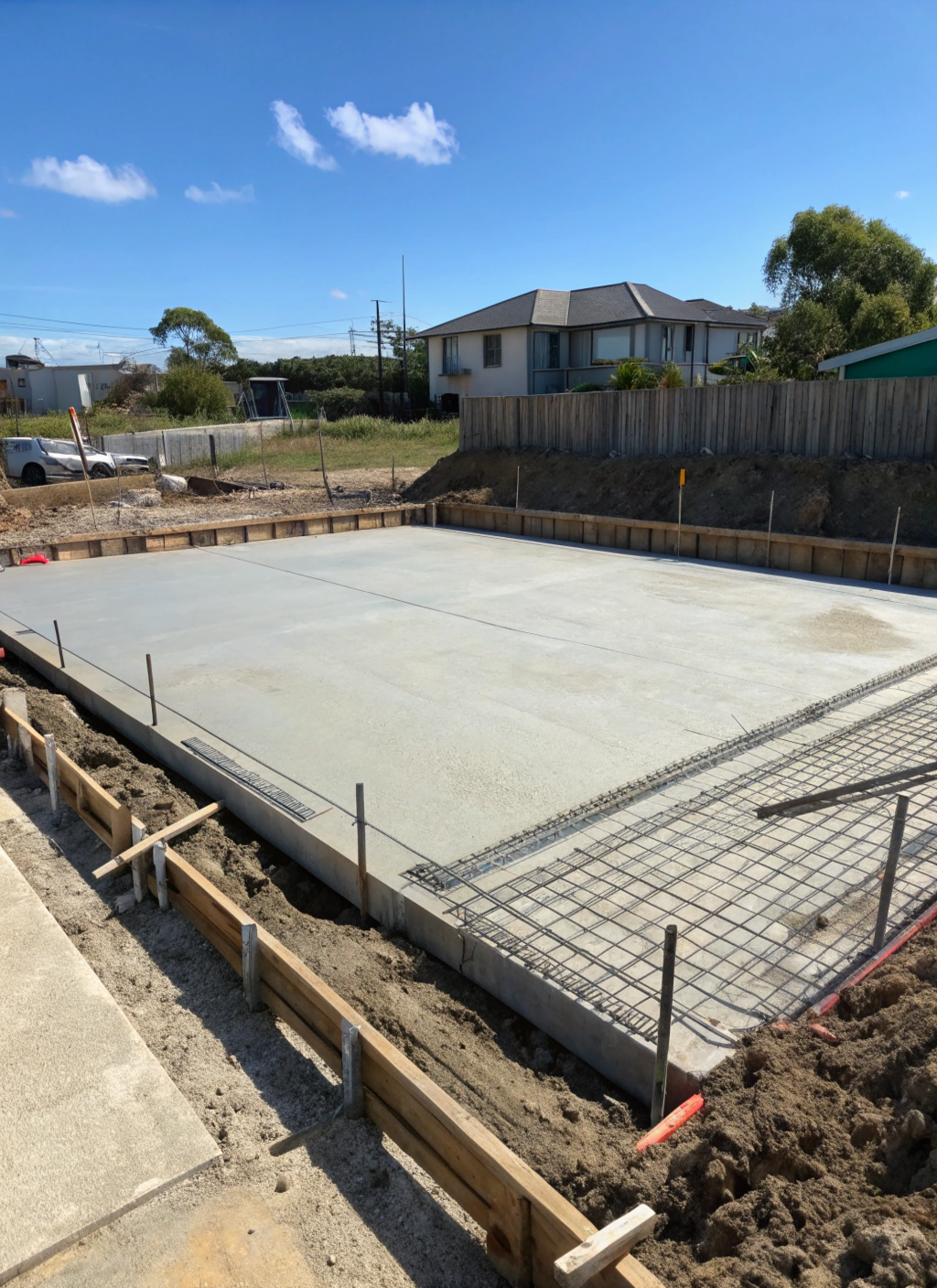
Before concrete is placed on any house slab in Queensland, a mandatory hold point inspection must be passed. Your building certifier inspects reinforcement placement, steel cover, chair heights, and formwork accuracy — confirming that what’s been built on the ground matches the engineer’s documentation. Nothing gets covered until it’s been sighted and approved. Concrete does not go down until clearance is given.
How We Help Keep Your Construction Program on Schedule
A failed pre-pour inspection means program delays — and on a construction program, delays compound quickly. Our paperwork is in order before inspection day, reinforcement is placed to the engineer’s documentation, and formwork is accurate. We communicate proactively with certifiers throughout the process so there are no surprises on inspection day and your program stays on track.
Hervey Bay and Fraser Coast Site Conditions — What Every Builder Needs to Know
Coastal Exposure and Concrete Mix Requirements
Hervey Bay’s proximity to the coast places the site in a coastal exposure classification under AS 2870 and the Queensland Development Code. Salt air accelerates the breakdown of concrete mixed to the wrong strength or permeability. This affects both the concrete mix design and the reinforcement cover requirements. A contractor familiar with coastal exposure requirements selects the correct mix and cover from the outset — not after a certifier flags it.
Sandy Subbase Preparation on Coastal Sites
Sandy soil profiles are common across Hervey Bay’s coastal suburban areas. Sand behaves differently to clay under compaction — it requires specific compaction methods and testing to confirm it will perform under load. A contractor who has worked extensively across Hervey Bay understands these site conditions and what’s required to get compaction results that hold up under a house slab.
House Slab Construction Across Hervey Bay and the Fraser Coast
We work across Hervey Bay and the broader Fraser Coast — Urangan, Pialba, Torquay, Eli Waters, Kawungan, Craignish, Point Vernon, and the surrounding region. These aren’t just suburbs we’ve heard of — they’re sites we’ve worked on, soil profiles we’re familiar with, and certifiers we’ve built working relationships with over time.
Fraser Coast sites vary. A slab in Kawungan sits on different ground to a slab in Urangan. Coastal exposure conditions differ from one end of the region to the other. That local knowledge matters when it comes to mix selection, subbase preparation, and getting your pre-pour inspection across the line without delays.
If your project is on the Fraser Coast, you’re in our operating area.
Frequently Asked Questions — House Slab Hervey Bay
As early as possible. We need to be across your site conditions, engineer documentation, and approval timeline well before pour day. The earlier you bring us in, the smoother the process runs.
Not always. We can provide a preliminary quote based on your site location and a general understanding of local soil conditions. A geotechnical report is required before the engineer can finalise the slab design, but it doesn’t need to be in hand before we start the conversation.
Hervey Bay’s coastal areas tend toward sandy profiles — generally stable but requiring careful compaction. Parts of the Fraser Coast have more reactive clay soils. We’re familiar with the range of conditions across the region and factor that into how we approach each site.
A pre-pour inspection is a mandatory hold point where your building certifier inspects the reinforcement and formwork before concrete is placed. We coordinate our work to be inspection-ready and communicate directly with certifiers to keep things moving.
Concrete reaches sufficient strength for framing typically within seven days, though full cure takes longer. We’ll give you a clear indication of timing based on the mix used and the conditions on the day of the pour.
We coordinate termite management as part of the construction sequence. The work is carried out by a licensed pest management technician and fully documented before the pre-pour inspection.
Get a House Slab Quote for Your Hervey Bay Project
Owner-builders and licensed builders both know the same thing — you need your concreter locked in well before you’re ready to pour. Slab stage sits early in the construction program, and the trades that follow you depend on it going smoothly.
Get in touch with us today to discuss your project. We’ll talk through your site, your timeline, and what’s involved in getting your house slab construction underway on the Fraser Coast.
Call us directly or submit your project details below and we’ll get back to you promptly.
- 📞 0741449742
- 📍 Serving Hervey Bay, Fraser Coast, and surrounding regions
- We respond to all quote requests within one business day
Tell us about your site and we’ll get back to you with a quote.
