
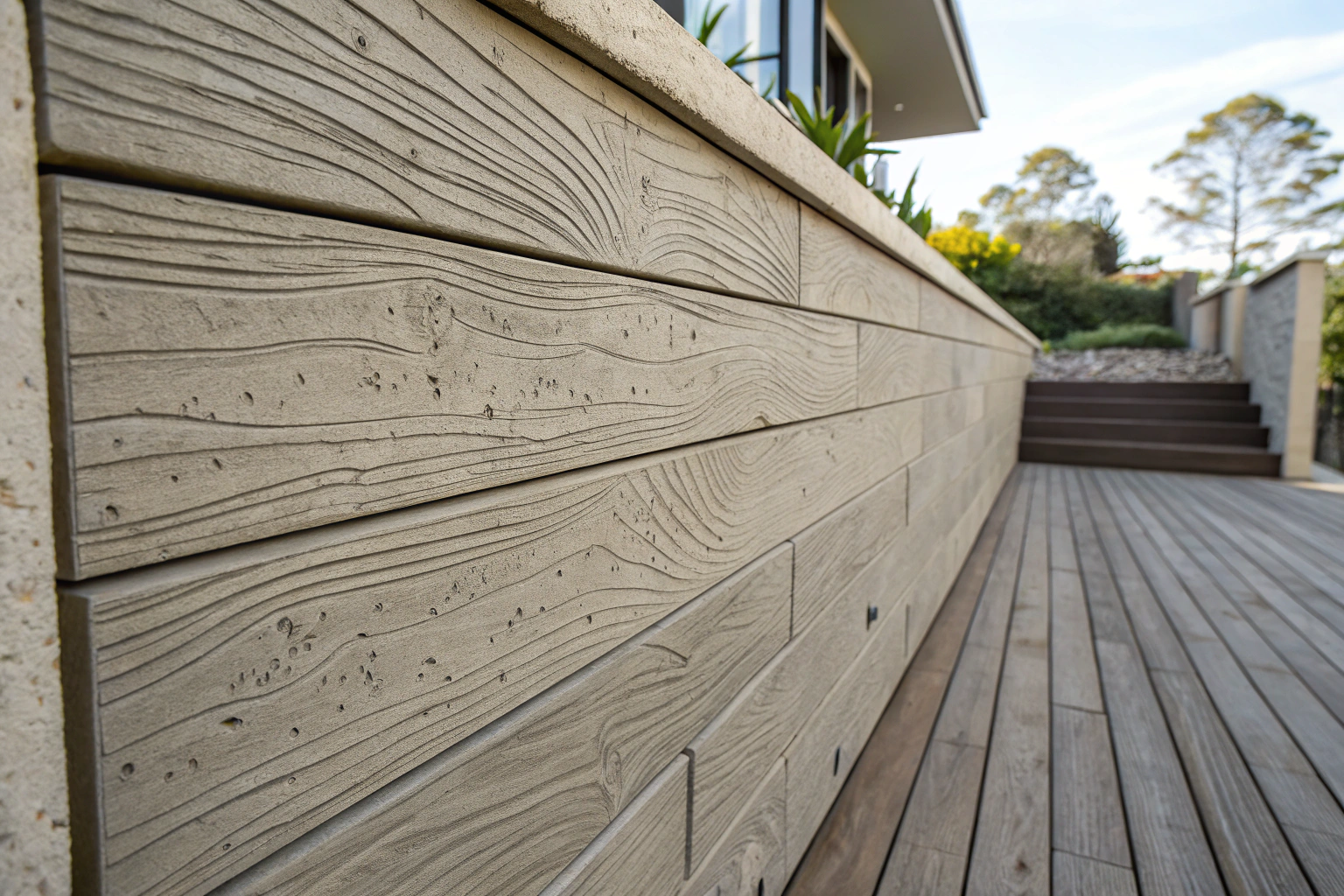
What Is a Concrete Retaining Wall?
A concrete retaining wall is an engineered structure designed to hold back soil, manage level changes, and prevent erosion on sloped or tiered properties — built to resist the lateral pressure of retained earth over decades.
- Constructed from reinforced poured concrete or concrete masonry blocks
- Requires correct footing depth, wall thickness, and drainage to perform to spec
- Walls over 1 metre in Queensland generally require building approval and engineer certification
- Lifespan of 50+ years when properly designed, reinforced, and sealed
- Suited to Hervey Bay’s clay-heavy soils and coastal moisture conditions
In Queensland, retaining walls aren’t just a landscaping decision — they’re a structural and compliance matter. Getting the engineering right from the start is what separates a wall that lasts decades from one that moves, cracks, or fails within a few years.

Why Hervey Bay Properties Need Concrete Retaining Walls
Hervey Bay’s residential blocks weren’t all created flat. Level changes are common across suburbs like Urangan, Pialba, Eli Waters, and Kawungan — and the soil conditions here make unmanaged slopes a genuine problem over time. Hervey Bay’s clay-heavy soils expand and contract with wet and dry cycles, which means slopes that look stable in winter can be actively moving through a Queensland summer.
Add coastal moisture, salt air, and the region’s intense UV exposure into the mix, and you’ve got conditions that chew through timber sleepers and cheaper retaining solutions within a decade. Concrete holds up where other materials don’t.
Beyond the structural case, there’s a practical one. Tiered yards, sloped driveways, and outdoor entertaining areas are a feature of everyday life across the Fraser Coast. A well-built concrete retaining wall doesn’t just solve a soil problem — it creates usable flat space, improves drainage, and lifts the overall presentation of the property. For homeowners investing in their outdoor living areas, it’s one of the highest-impact improvements they can make.
How a Concrete Retaining Wall Is Engineered
A retaining wall looks simple from the street. What’s happening below ground and behind the face is where the real work is. Here’s what goes into a wall that’s built to perform.
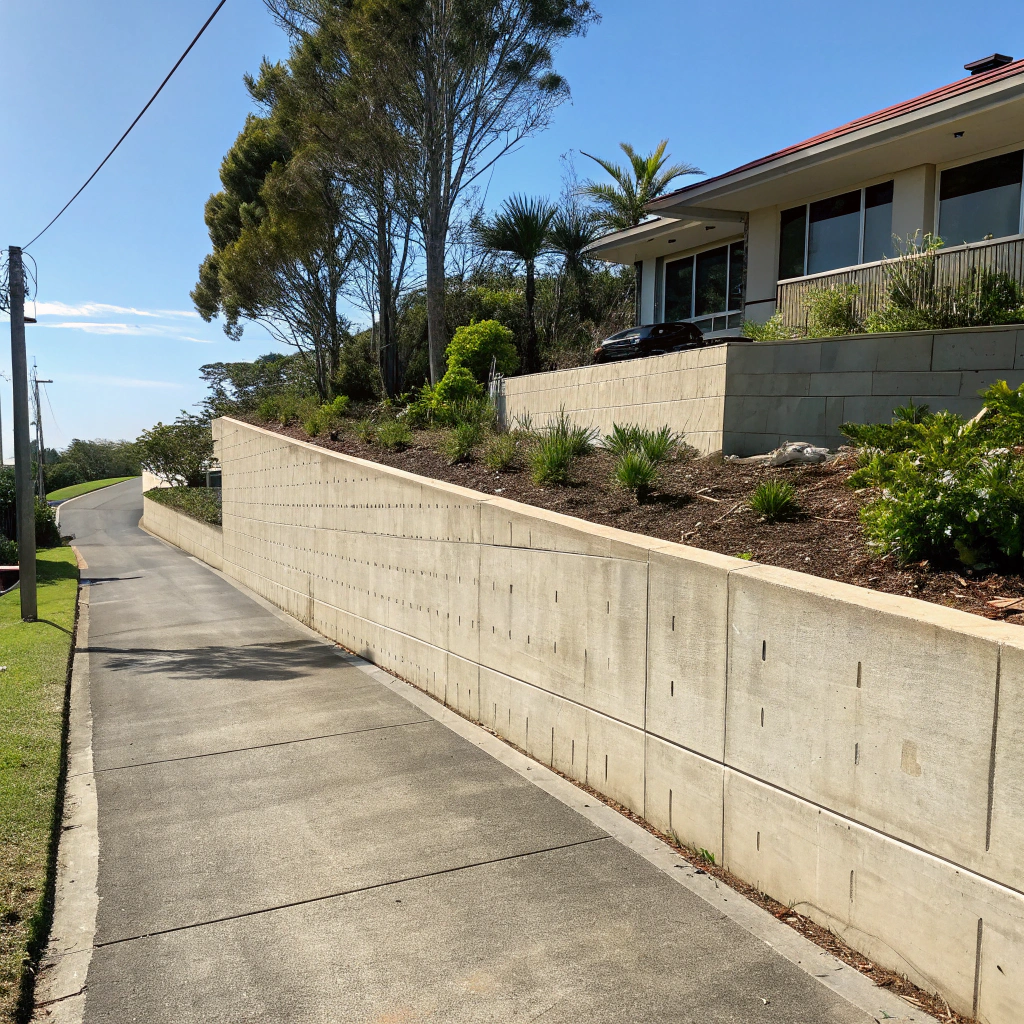
Queensland Retaining Wall Approvals and Compliance
Retaining walls in Queensland sit within a clear compliance framework. Here’s what you need to know before you build.
When a Building Approval Is Required: Retaining walls over 1 metre in Queensland generally require building approval — especially near boundaries, structures, or drainage lines. Requirements vary by site, so clarifying early avoids costly rectification work later.
Fraser Coast Council Requirements: Fraser Coast Regional Council has specific rules around walls near boundaries, easements, and drainage infrastructure. Working with a contractor familiar with local requirements means the wall is built to comply from day one.
Engineer Certification: Walls requiring approval must be designed by a registered Queensland engineer. They produce a stamped design, we build to that design, and a certifier signs off on completion. We manage this process on your behalf.
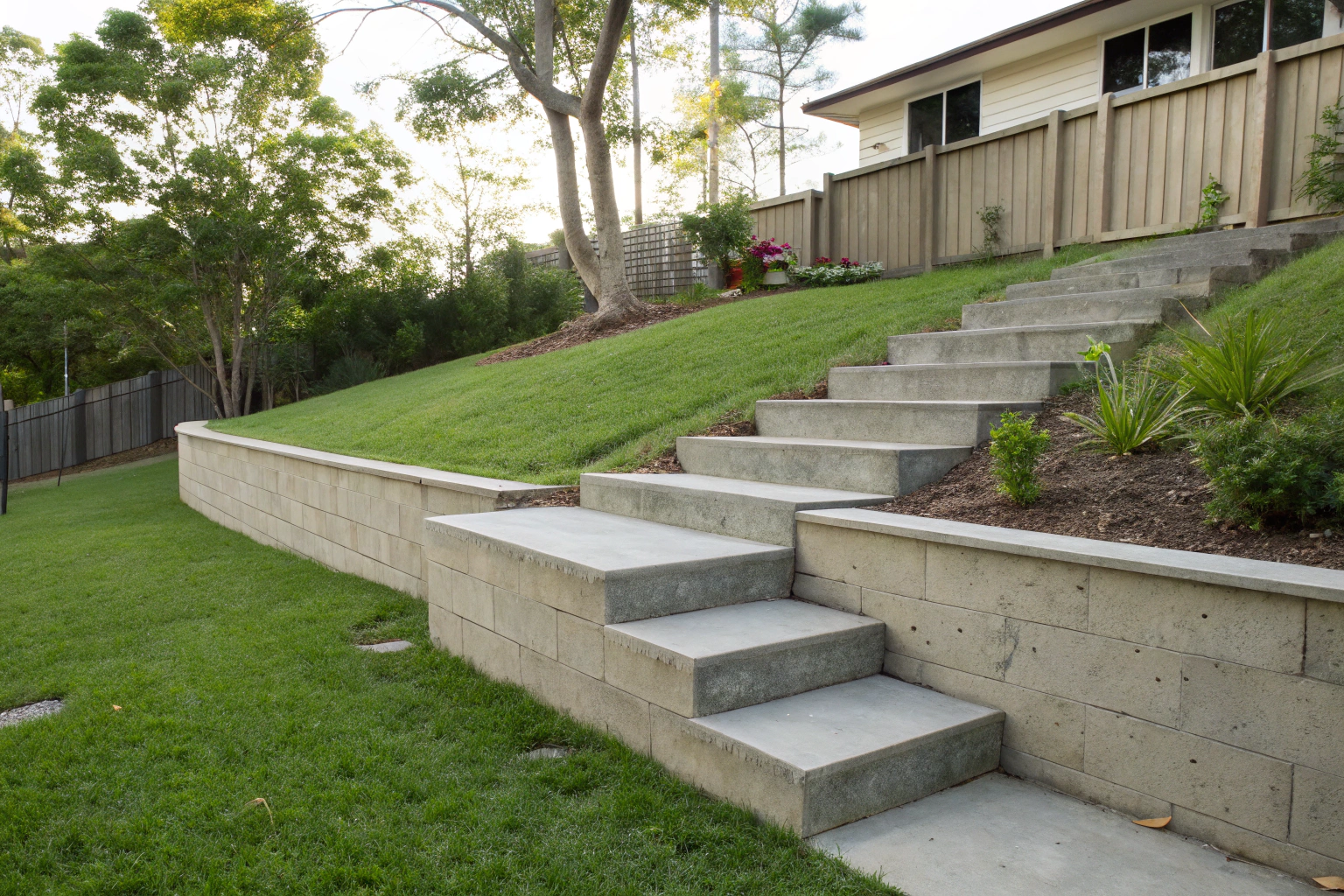
Retaining Wall Applications Across Hervey Bay
Concrete retaining walls solve different problems on different properties. Here are the most common applications we handle across the Fraser Coast.
Residential Garden and Landscaping Walls: Tiered garden beds, sloped backyards, and established blocks across Hervey Bay — turning awkward slopes into usable, well-finished outdoor space.
Driveway Retaining Walls: Level changes at the street boundary are common here. A driveway retaining wall manages that transition — structural requirement with serious kerb appeal impact.
Tiered Outdoor Entertaining Areas: Retaining walls that define level changes between lawn, patio, and pool areas — the centrepiece of many Hervey Bay outdoor living upgrades.
Commercial and Industrial Sites: Car parks, building pads, and site preparation across the Fraser Coast. Engineer-certified designs and commercial-grade concrete specs handled in full.
Rural and Lifestyle Properties: Driveways, dam walls, and site levelling for acreage and lifestyle properties across the broader Fraser Coast region.
Concrete vs. Other Retaining Wall Materials
Concrete isn’t the only option for retaining walls — but in Hervey Bay’s conditions, it’s the most defensible long-term choice.
Timber sleepers are affordable upfront, but salt air and coastal moisture accelerate rot fast. Most timber walls in Hervey Bay are showing serious deterioration within 10–15 years, and full replacement is eventually inevitable.
Segmental concrete blocks work for low garden walls, but at height and under load, reinforced poured concrete performs more reliably. For walls over 1 metre retaining significant soil volume, segmental block rarely delivers the structural performance needed.
Reinforced poured concrete outperforms both in terms of lifespan, structural performance, and resistance to the load and movement Hervey Bay’s clay soils generate. A properly built concrete retaining wall won’t need replacing in your lifetime.
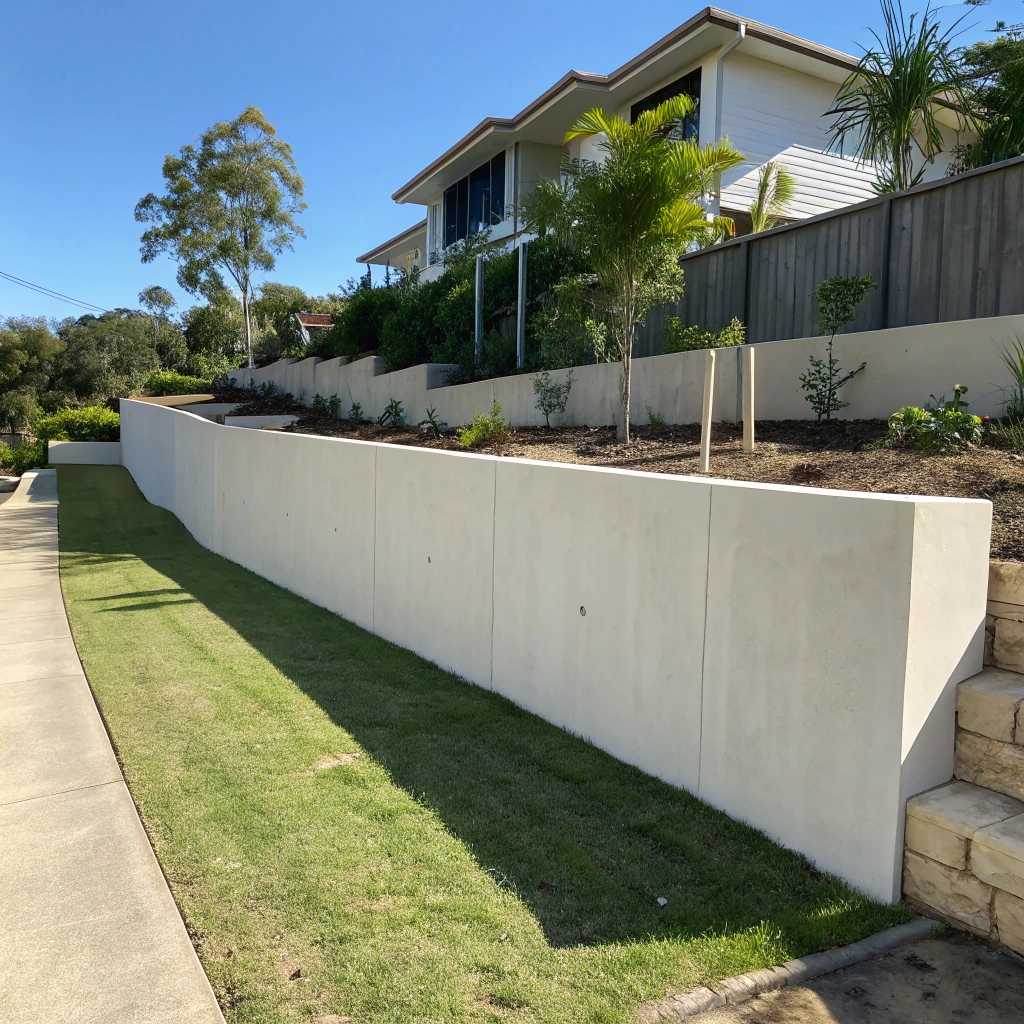
Design and Finish Options for Concrete Retaining Walls
A retaining wall is often a prominent feature of the outdoor space — so the finish deserves real consideration, not an afterthought.
Board-formed concrete gives a textured, architectural finish with visible timber grain imprinted into the face. It works well in contemporary outdoor settings and suits the aesthetic many sea-changers and retirees are after when investing in a premium outdoor space.
Rendered or painted faces deliver a clean, smooth look that ties neatly into the home’s exterior. Rendered finishes can also be coloured — giving flexibility to match existing paving, fencing, or landscape elements.
For a more layered aesthetic, a concrete retaining structure can be faced with timber, Corten steel, or rendered block — combining the structural reliability of concrete with a more designed finish on the visible face.
The right choice depends on the broader landscaping context. It’s worth settling on the finish direction early — before formwork goes in.
What to Expect From the Retaining Wall Process
We know the quoting and building process can feel uncertain — especially for a structural job with compliance requirements attached. Here’s exactly what happens from first contact to finished wall.
Site Assessment and Quote: We visit the site, assess the level changes, soil conditions, and proximity to boundaries, and talk through finish options with you. The quote is written, fully broken down, and free. No surprises on the number, and no obligation to proceed.
Design and Approvals: For walls requiring engineer certification and building approval, we manage the process — coordinating with the engineer, submitting documentation, and keeping you informed on the timeline. You’ll know upfront if approval is needed and roughly how long it adds to the schedule.
Construction and Completion: We start with footing excavation, then formwork, reinforcement placement, concrete pour, drainage installation, and backfilling. A typical residential retaining wall takes two to four days on site, depending on length and height. We leave the site clean, and the job finished to standards.
Frequently Asked Questions About Concrete Retaining Walls in Hervey Bay
Generally, walls over 1 metre in height require building approval in Queensland — particularly near boundaries, easements, or drainage lines. We assess this at the site visit and let you know exactly what’s needed before any work starts.
A properly designed, reinforced, and sealed concrete retaining wall will last 50 years or more. In Hervey Bay’s coastal conditions, concrete significantly outlasts timber and most block alternatives.
Cost depends on wall height, length, soil conditions, finish type, and whether engineering and approval are required. We provide a fully itemised written quote after the site assessment — no guesswork, no hidden costs.
Yes. For walls requiring engineer certification and building approval, we coordinate the whole process — including engaging the engineer and managing documentation with the certifier.
Poured reinforced concrete performs better at height and under significant soil load. Concrete blocks work well for lower garden-scale walls. For anything over 1 metre retaining substantial soil volume, we typically recommend poured concrete.
Footing depth depends on wall height and the bearing capacity of the soil. We size footings to engineering specifications — undersized footings are the most common reason retaining walls fail, and we don’t cut corners there.
Get Your Free Retaining Wall Quote
If you’ve got a sloped block, a failing wall, or an outdoor space that needs levelling out — we’re the team to call. Coastal Concreters Hervey Bay handles everything from the initial site assessment through to the finished wall, across residential and commercial properties on the Fraser Coast.
Free site assessment. No obligation. Fraser Coast locals.
Get Your Free Quote
Three simple steps:
- Call or submit your details
- We visit your site and assess the job
- You receive a written quote within 48 hours
