
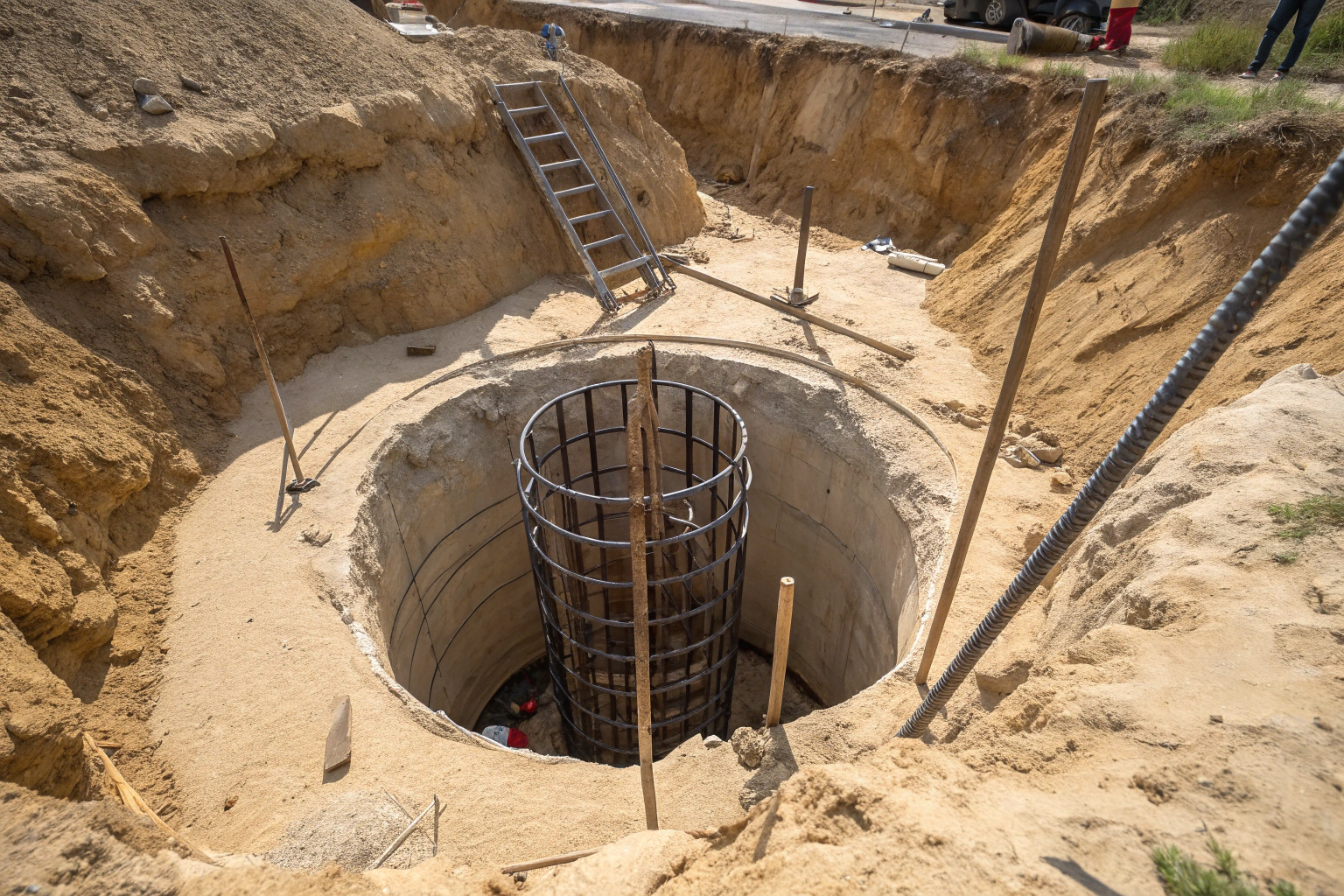
What Are Concrete Footings?
Concrete footings are the structural base that transfers the weight of a building or structure down into stable ground. In Hervey Bay and across the Fraser Coast, where soil conditions vary significantly from one suburb to the next, footings need to be engineer-designed to suit the specific ground they’re sitting on — not just poured to a standard depth and hoped for the best.
What footings do:
- Transfer the load of a structure down to stable, load-bearing ground beneath the surface
- Spread that load wide enough that the soil beneath doesn’t move or compress under the weight
- Steel reinforcement adds tensile strength and prevents cracking under load
- Hervey Bay’s sandy coastal soils and clay-influenced inland profiles mean depth and width vary significantly by site
- In Queensland, residential footings must be engineer-designed and pass a mandatory inspection before they can be covered
Get the footing wrong, and you won’t know about it straight away — but the repair bill when it shows up will be significant.

Why Concrete Footings Are the Most Critical Part of Any Build
Every structure sits on its footings. The frame, the walls, the roof — all of it is only as good as what’s underneath. Before a single post goes in or a wall goes up, the footing has to be right.
When footings are undersized, poorly reinforced, or poured to the wrong depth for the soil conditions, the structure above starts to move. Walls crack. Posts lean. Slabs lift at the edges. None of it happens overnight — but it all traces back to the same starting point.
The problem is that by the time those signs appear, the footing is long buried. Fixing it means excavating, underpinning, or, in serious cases, demolishing and starting again. That’s not a maintenance cost — it’s a major structural repair.
For Hervey Bay homeowners, builders, and owner-builders, quality footing work isn’t a place to cut costs. It’s the investment that protects everything built on top of it.
How We Construct Concrete Footings in Hervey Bay
Every footing job follows the same disciplined process — from the first peg in the ground to the finished pour.
Hervey Bay Soil Conditions and Why They Matter for Footing Design
The ground across the Fraser Coast isn’t consistent — and that’s why local knowledge matters here.
Close to the bay, soils tend to be sandy and free-draining. Further inland toward Kawungan and Craignish, you’re dealing with clay-influenced ground that expands when wet and shrinks when dry. That movement puts direct pressure on footings and everything built above them.
A footing depth that works in Urangan might be wrong two suburbs over. Cookie-cutter specs don’t account for that. Engineer-designed footings do.
Under Queensland’s building code, sites are classified by soil reactivity, and footing designs must match that classification. Getting a soil report and working to an engineer’s design isn’t red tape — it’s what keeps the structure above from moving with the ground beneath it.
We’ve worked across Hervey Bay and the Fraser Coast long enough to know what the ground does here.
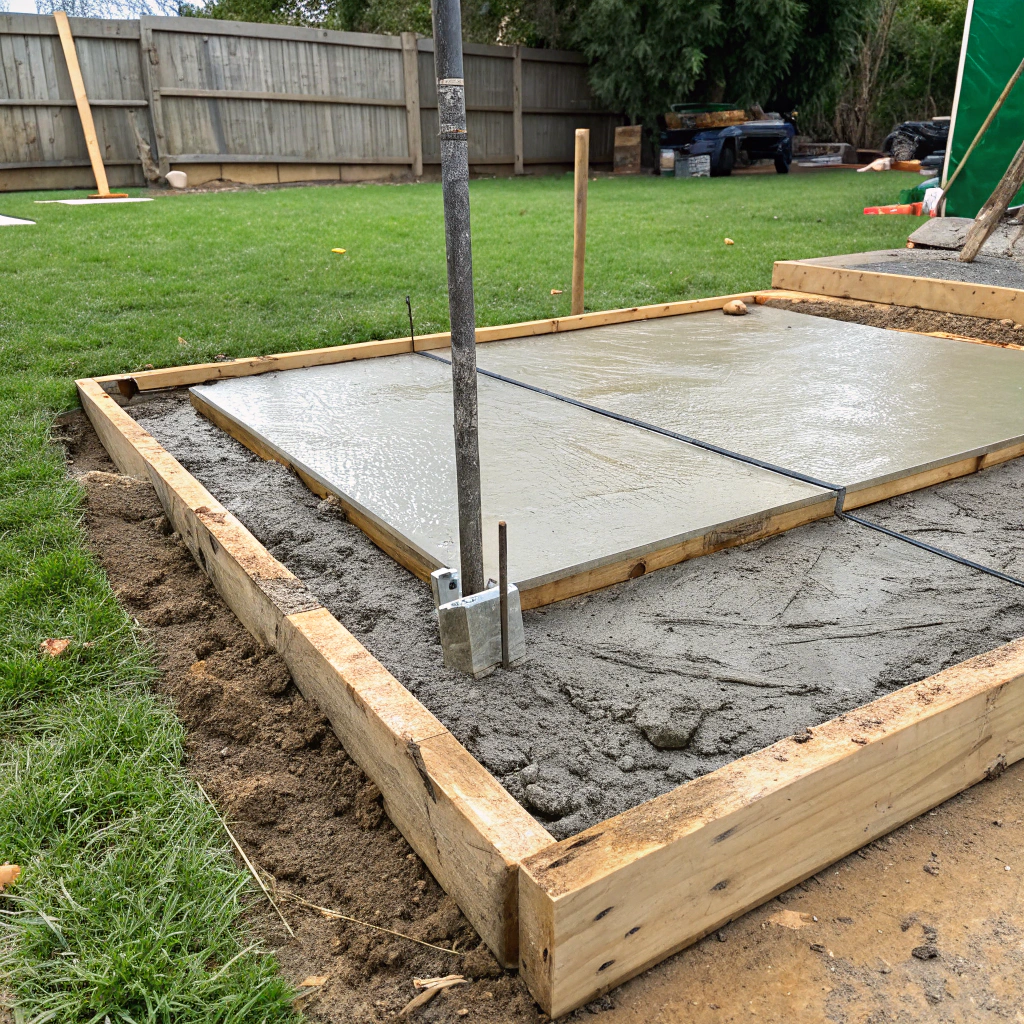
Types of Concrete Footings We Pour
Pad Footings: The most common residential footing type in Hervey Bay. Pad footings sit under individual posts or columns — pergolas, decks, carports, and steel frame structures all typically use them. Size and depth vary depending on the load above and the soil conditions below.
Strip Footings: Used for continuous wall and frame construction — house footings, retaining walls, and boundary structures. Strip footings run the length of a wall line, spreading the load evenly along the bearing ground beneath.
Pier Footings: Used where depth is needed to reach stable bearing ground — elevated homes, high-set decks, and structures on sites where the upper soil profile isn’t suitable for shallow footings. Piers go down until they hit something solid.
Combined Footing Systems: For larger loads and commercial applications where multiple columns or heavy structural loads require an integrated footing design. The engineer specifies how the system works together — we pour it into that design accurately.
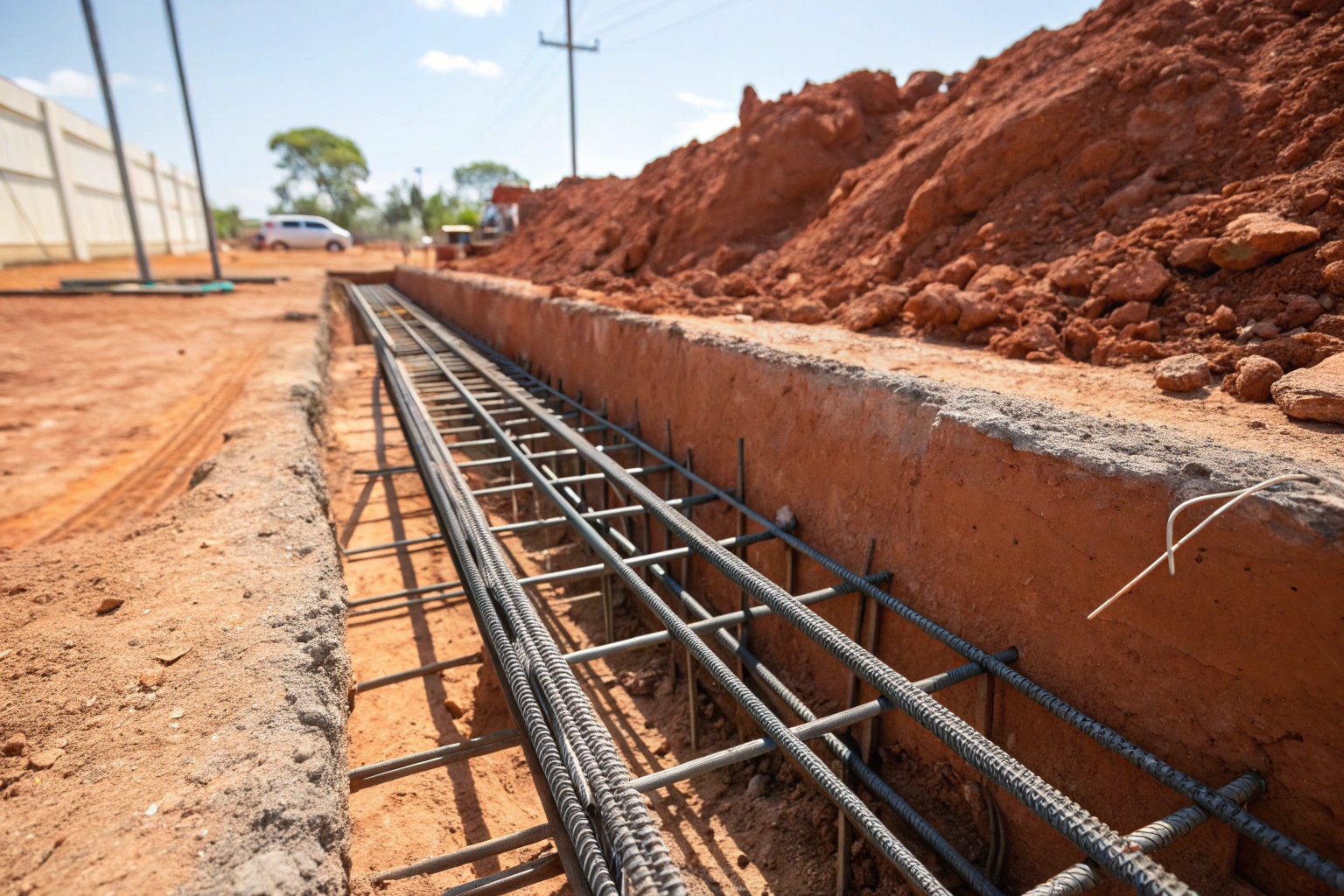
Engineering, Compliance and the Inspection Process in Queensland
In Queensland, residential and commercial footings need to be engineer-designed and inspected before they’re covered.
That inspection step is non-negotiable. Once the concrete is in the ground, nobody can verify what’s underneath without digging it back up. The inspection happens while the steel is placed and before the pour — confirming that reinforcement, depth, and positioning all match the engineer’s drawings.
For builders and owner-builders managing a construction program, this is where contractor reliability matters most. A footing crew that reads drawings accurately and pours consistently to design keeps your inspection on schedule. One that doesn’t can hold up an entire build.
We work directly from engineer drawings, we know Queensland’s inspection requirements, and we understand what building certifiers are looking for. When the inspector arrives, the work is ready.
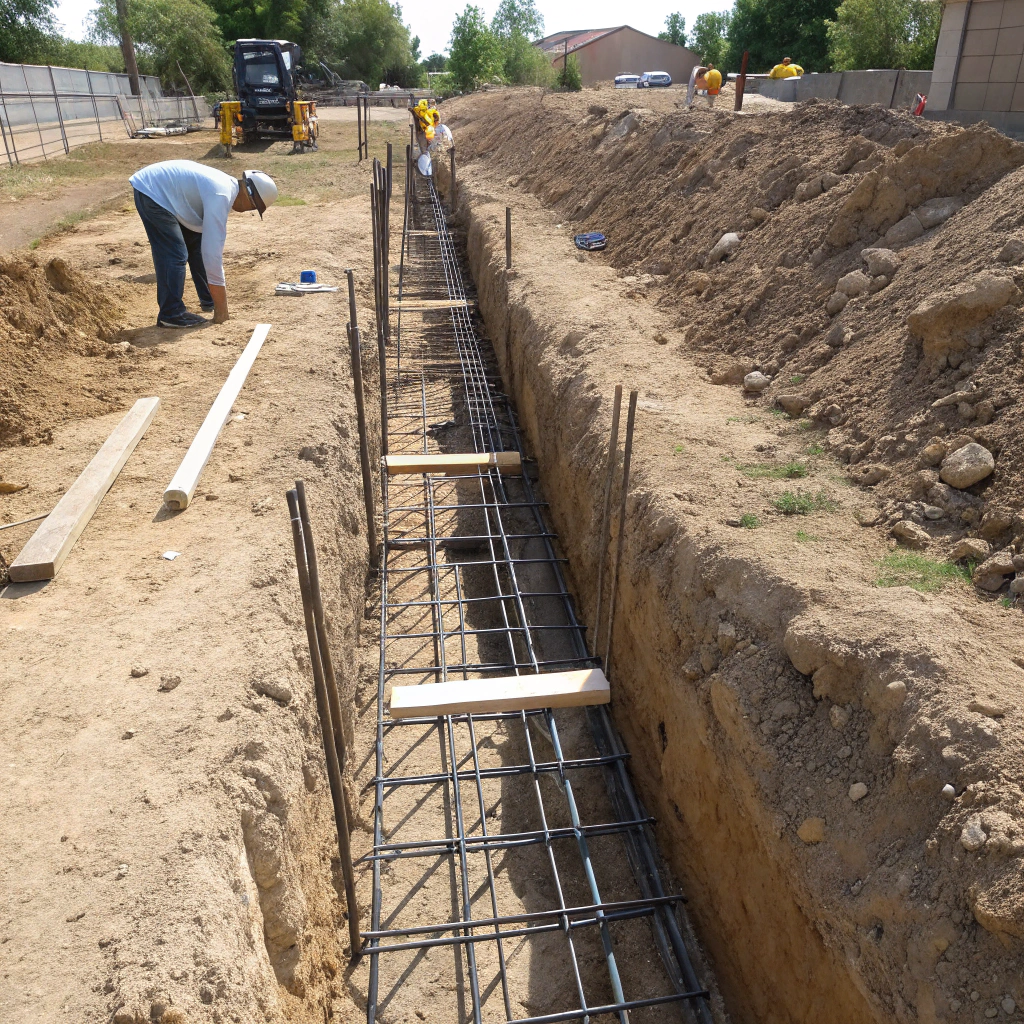
Concrete Footing Applications for Hervey Bay Homeowners
House and Extension Footings: The most structurally demanding footing work on any residential property. House footings carry the full load of the frame, walls, and roof.
Deck and Pergola Post Footings: Pad footings for deck and pergola posts need to be sized and positioned correctly from the start. A post footing that’s too shallow or undersized will move.
Shed and Garage Footings: Sheds and garages in Hervey Bay often carry significant loads — vehicles, boats, equipment. Edge footings and internal pads need to suit both the slab design and the soil beneath it.
Retaining Wall Footings: Retaining walls push back against soil load continuously. The footing underneath has to be designed for that lateral pressure.
Fence Post Footings: Straightforward but worth doing properly. Correctly poured fence post footings resist movement from wind load and soil shift
Why Hervey Bay Builders and Homeowners Choose Us for Concrete Footings
Footings are the one part of a build where there’s no room for guesswork. Builders and owner-builders across the Fraser Coast work with us because we read engineer drawings accurately, set out correctly, and pour consistently to design — every time.
We’ve worked across Hervey Bay’s full range of soil conditions and project types. Residential house footings, shed and garage slabs, deck and pergola pads, retaining wall bases, commercial footing systems — we know what each application requires, and we deliver it to the standard the engineer specified.
For homeowners, that means a contractor who explains what’s involved, gives a clear quote, and does the work properly without cutting corners on reinforcement or depth.
For builders, it means a footing crew that shows up, reads the drawings, and has the work inspection-ready when the certifier arrives.
That’s what consistent, reliable concrete footing work looks like on the Fraser Coast.
Frequently Asked Questions About Concrete Footings in Hervey Bay
For any residential or commercial structure in Queensland, yes. Footings need to be engineer-designed and inspected before they’re covered. We work directly from the engineer’s drawings on every job.
It depends on your site’s soil conditions. Sandy soils near the bay and clay-influenced ground further inland require different depths to reach stable bearing ground. We dig to what the engineer specifies for your specific site — not a standard number.
Pad footings sit under individual posts or columns. Strip footings run continuously under walls and frames. Pier footings go deep to reach stable ground on sites where the upper soil profile isn’t suitable for shallow footings. We’ll pour whichever type your engineer has specified.
Generally, seven days before loading, though full strength is reached at 28 days. We’ll advise on the right timeframe for your specific mix and conditions.
Reactive soils expand when wet and shrink when dry. That movement can push against footings and cause structures above to shift and crack. Hervey Bay has variable reactivity across different suburbs — which is why a soil report and engineer design are so important here.
Yes. We’re used to working within construction programs and alongside certifiers. We read engineer drawings accurately and have the work inspection-ready when it’s needed.
Get a Free Concrete Footing Quote in Hervey Bay
Getting your footings right starts with a conversation. Tell us about your project, and we’ll assess what’s needed for your site and soil conditions — then give you a clear, itemised quote with no surprises.
Three simple steps:
- Call us or submit an enquiry
- We assess your project and site conditions
- You get a clear, itemised quote
We service Hervey Bay and the Fraser Coast, including Urangan, Pialba, Torquay, Eli Waters, Kawungan, Craignish, and surrounding areas.
Call us today or submit your enquiry online.
