
How Thick Should a Garage Slab Be?
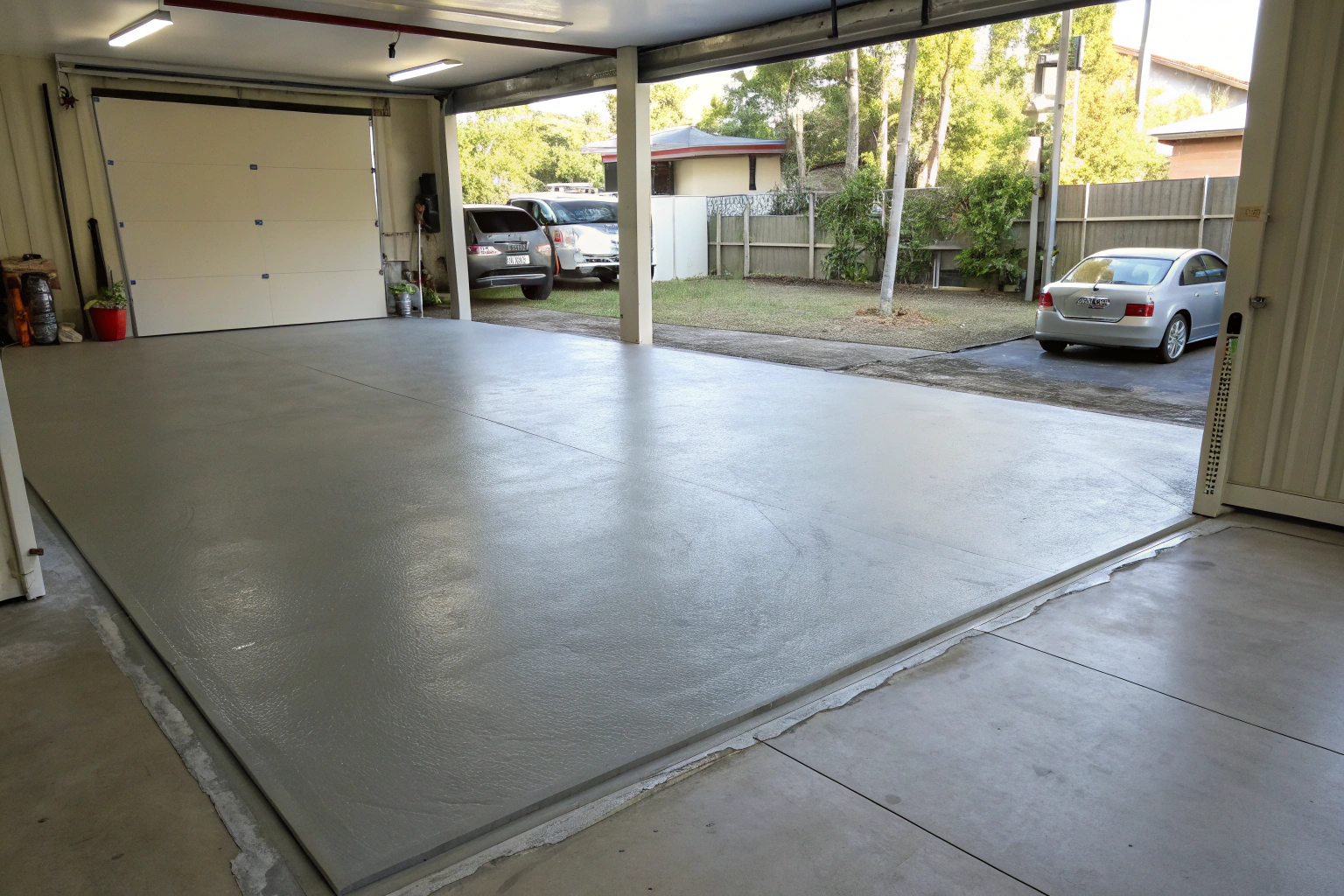
For a standard residential garage, 100mm is the minimum — suitable for everyday passenger vehicles. But that’s not the right answer for every pour.
- 100mm — standard passenger vehicles (cars, small SUVs)
- 125mm–150mm — utes, vans, trailers, caravans, or frequent heavy loads
- 150mm+ — workshop use, hoists, machinery, or heavy equipment
- Subbase compaction — non-negotiable in Hervey Bay’s sandy coastal soils; a loose or poorly compacted subbase leads to settlement regardless of slab thickness
- Concrete strength — 25–32 MPa minimum for structural integrity under vehicle loads
- Reinforcement — SL72 or SL82 mesh as standard; additional bar reinforcement for heavier loads or machinery use
We don’t apply a single default thickness to every garage job. Thickness is determined by what the garage will actually be used for and what’s happening with the ground underneath it.

Why Your Garage Slab Is the Most Important Pour on Your Property
People often focus on the driveway — and the driveway matters — but the garage slab takes a beating day after day. Every time you pull in, park a loaded trailer, or leave a ute sitting on it for weeks, that slab is carrying a real load. Get the thickness or reinforcement wrong, and you’ll see it: cracks that spread, surfaces that become uneven, and a garage door that no longer seals at the base.
Oil, fuel, and brake fluid are hard on concrete that hasn’t been finished properly. Drainage fall matters too — the slab needs to slope toward the opening so water runs out, not in.
A poorly built garage slab is expensive to fix after the fact. Done right from the start, it’s a surface that handles whatever you put on it for decades.
What Goes Into a Quality Garage Slab in Hervey Bay
Garage Slab Thickness — What's Right for Your Build
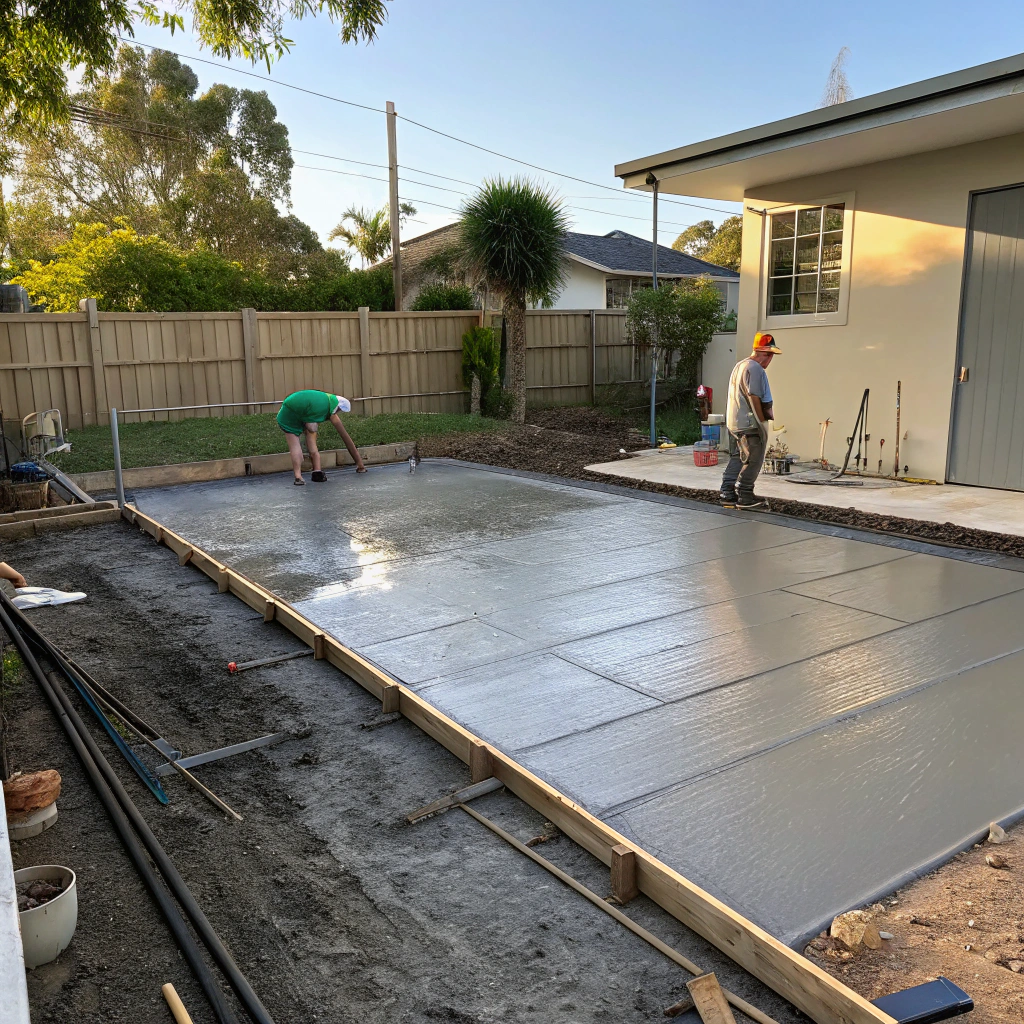
The right thickness comes down to what the garage will actually be used for. Three common scenarios cover most residential builds.
A standard single or double garage for everyday passenger vehicles works fine at 100mm — that’s the baseline for most home builds across Hervey Bay’s newer estates.
Step up to 125mm if the garage regularly holds a ute, van, trailer, or caravan. The extra thickness handles the additional load without putting stress on the slab over time.
For a workshop or any space where machinery, hoists, or heavy equipment will be used, 150mm or more is the right call. The floor needs to carry concentrated loads that a standard residential slab isn’t built for.
We work out the right thickness during the quote — based on what you’re building, what you’re parking, and what the ground underneath is doing.
Garage Types and Configurations We Pour
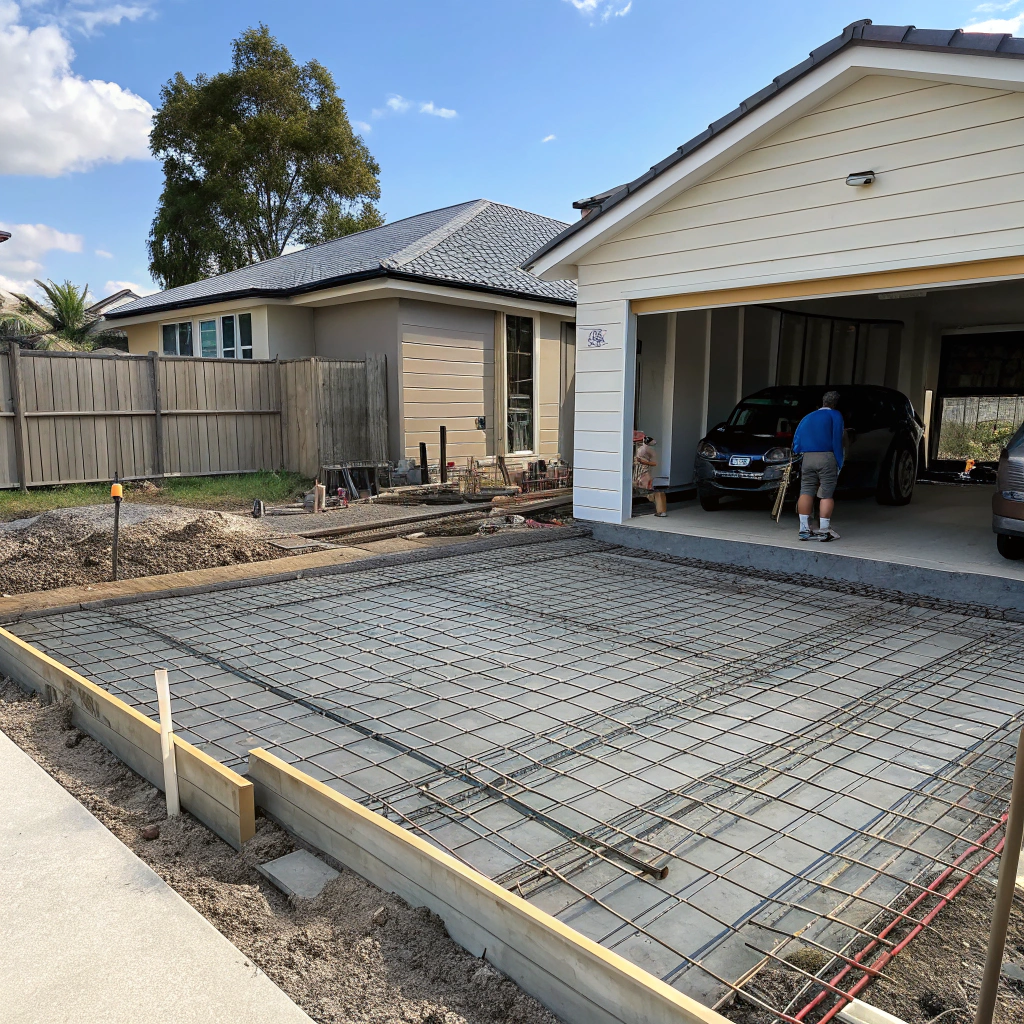
Attached Garages — New Home Builds: Part of the overall building approval and poured to engineering requirements as part of the construction sequence. Common across new estates in Eli Waters, Kawungan, and Craignish, where residential development has been running hard over the last few years.
Detached Standalone Garages: Popular on Hervey Bay’s larger suburban blocks — often added well after the original build. We handle both the replacement of an existing cracked or settled slab and new pours on previously unpaved areas.
Double Garages and Multi-Vehicle Slabs: Larger footprints need careful planning around control joint layout and reinforcement. Common in the sea-changer and retiree segment, where larger homes, multiple vehicles, and boats all need covered storage.
Workshop and Heavy-Use Garage Slabs: Thicker concrete, heavier reinforcement, and finish considerations for spaces where machinery, hoists, or heavy equipment will be in use. Hervey Bay has a strong shed and workshop culture — this is a job we do regularly across the Fraser Coast.
Building Approvals and Engineering Requirements for Garage Slabs in Queensland
Approval requirements depend on what you’re building and where.
For attached garages on new builds, the slab falls under the overall building approval and needs to meet engineering requirements set out in the plans. For detached garages, Queensland generally requires a building approval for any structure above 10sqm — and the slab needs to meet the structural requirements that come with it.
- Attached garage on a new build — covered under the overall building approval
- Detached garage above 10sqm — building approval required in Queensland
- The slab must meet the structural requirements set out in the approval
- Engineer input may be required, depending on the size and use of the structure
If you’re unsure what applies to your project, Fraser Coast Regional Council is the right starting point. We’re experienced working within these requirements and can coordinate with engineers and certifiers where needed.
Garage Slab Finishes and Upgrade Options
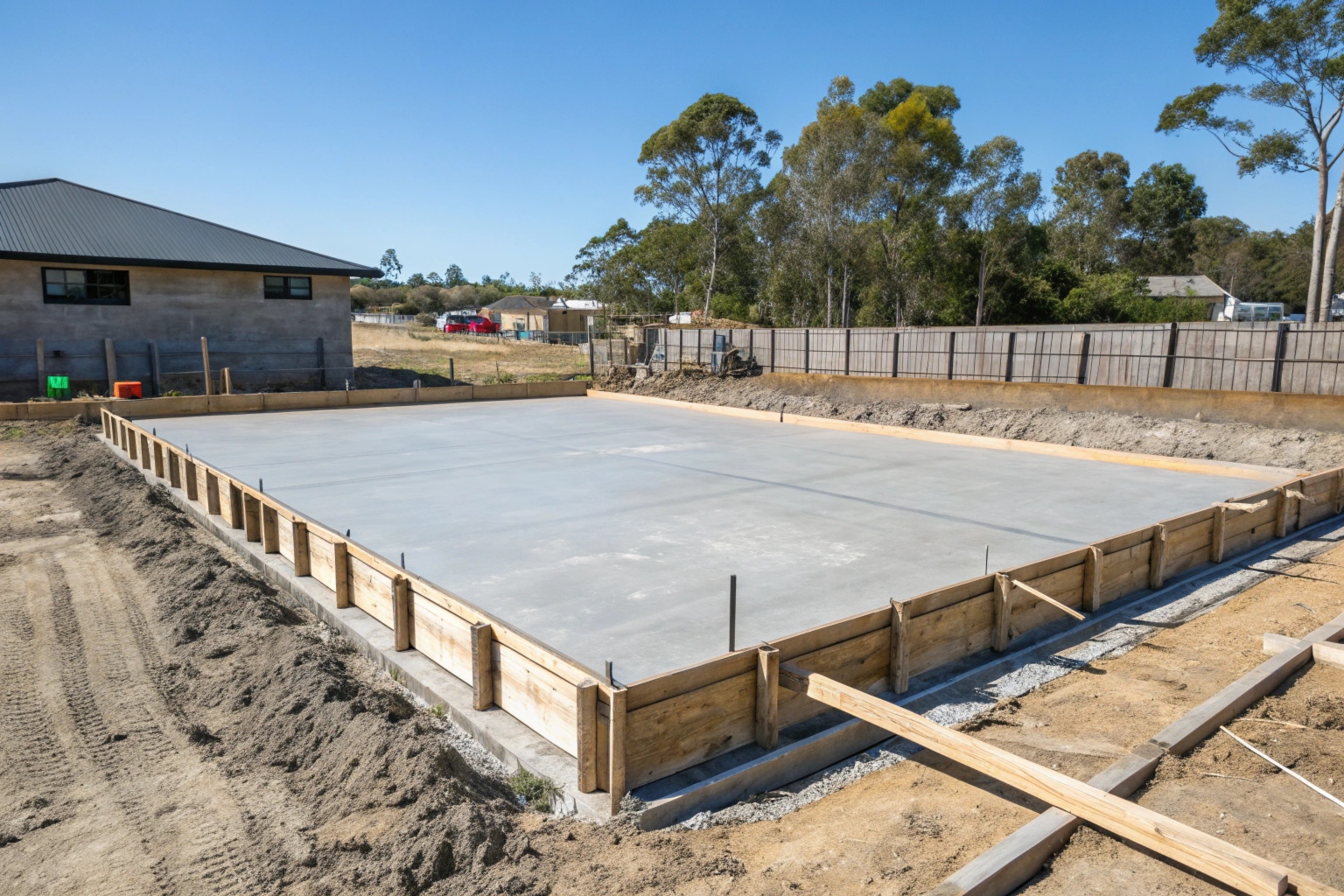
Steel Trowel Finish: The standard for garage slabs is smooth, durable, and easy to clean. Handles vehicle traffic well and holds up against oil and chemical spills. Sets up well for an epoxy coating later if you decide to upgrade.
Epoxy Coating: A popular upgrade for homeowners using their garage as a workshop, home gym, or extra living space. Hard-wearing, chemical-resistant, and easy to maintain.
Coloured Concrete: Worth considering for garages that are visible from the street or sit alongside an outdoor entertaining area. Adds a more finished look without a major cost premium — particularly relevant for the sea-changer and retiree segment where presentation matters.
Serving Hervey Bay and the Fraser Coast
We pour garage slabs across Hervey Bay, and the broader Fraser Coast — Urangan, Pialba, Torquay, Eli Waters, Kawungan, Craignish, Point Vernon, and Scarness are all regular work areas for us. We also cover Maryborough, Howard, and Toogoom. Every suburb comes with its own soil conditions and site considerations, and being genuinely local means we know what to expect before we arrive. If you’re on the Fraser Coast and need a garage slab built properly, we’re not a Brisbane operator sending a crew up — we’re here.
Frequently Asked Questions
Cost depends on size, thickness, reinforcement, and finish. A standard single garage slab runs differently from a double or workshop pour. We provide written quotes after a site measure — that’s the only way to give you an accurate figure.
Most residential garage slabs are poured in a single day. The slab then needs a minimum of 24–48 hours before foot traffic and around 7 days before vehicle access. We’ll give you a clear timeline before we start.
We recommend waiting at least 7 days for standard vehicle access. For heavier vehicles — utes, vans, trailers — 28 days is the safer timeframe. Concrete continues to cure and gain strength well beyond the initial set.
For attached garages, the slab falls under your overall building approval. For detached garages above 10sqm, a separate building approval is generally required in Queensland. We recommend confirming requirements with Fraser Coast Regional Council before starting.
Steel trowel is our standard recommendation — smooth, durable, and easy to clean. It also sets up well for an epoxy coating if you want to upgrade the floor later.
The most common causes are inadequate subbase compaction, insufficient thickness for the load, missing or poorly placed control joints, or soil movement underneath. In Hervey Bay, sandy and clay-heavy soils are a contributing factor in a lot of the cracked slabs we see.
Get a Free Garage Slab Quote in Hervey Bay
A garage slab is not the place to cut corners. If you’re building new, replacing an old cracked floor, or adding a workshop slab to your property, we’ll come out, measure the site, and give you a written quote at no cost.
Here’s how it works:
- Call or contact us to discuss your project
- We book a site measure at a time that suits you
- You receive a written quote based on your site and intended use
We service Hervey Bay and the Fraser Coast. Free measure and quote. Local business, no obligation.
Call us today or fill in the quote form to get started.
