
Precision Trenching Services for Hervey Bay and the Fraser Coast
Most people don’t think much about what’s running underneath their property — until something needs to go in, and suddenly the question of how it gets there becomes a very expensive one. Getting the trench wrong means a collapsed wall, a struck cable, or a surface that sinks six months later. We’ve seen it happen to plenty of Hervey Bay homeowners and builders who went with someone who didn’t really know the ground they were digging in.
We’re a local trenching specialist serving Hervey Bay and the broader Fraser Coast region, handling everything from residential utility trenching through to commercial drainage and strip footing excavation. Trenching isn’t bulk earthmoving — it’s precision work. The right depth, the right alignment, the right trench wall management for the soil you’re actually in. That’s what we bring to every job across Urangan, Pialba, Eli Waters, and the surrounding area.

What Professional Trenching Actually Involves
Trenching looks straightforward from the outside. Dig a hole, put the pipe in, fill it back up. But done properly, there’s a lot more happening at every stage — and each step directly affects whether the trench performs the way it’s supposed to, and whether the finished surface above it holds up long term.
Equipment We Use for Trenching Across Hervey Bay
Chain trenching machines are deployed for fast production trenching of standard utility trenches in open, accessible areas. They cut a consistent width and depth quickly, making them well-suited to long utility runs on residential and commercial sites with good machinery access.
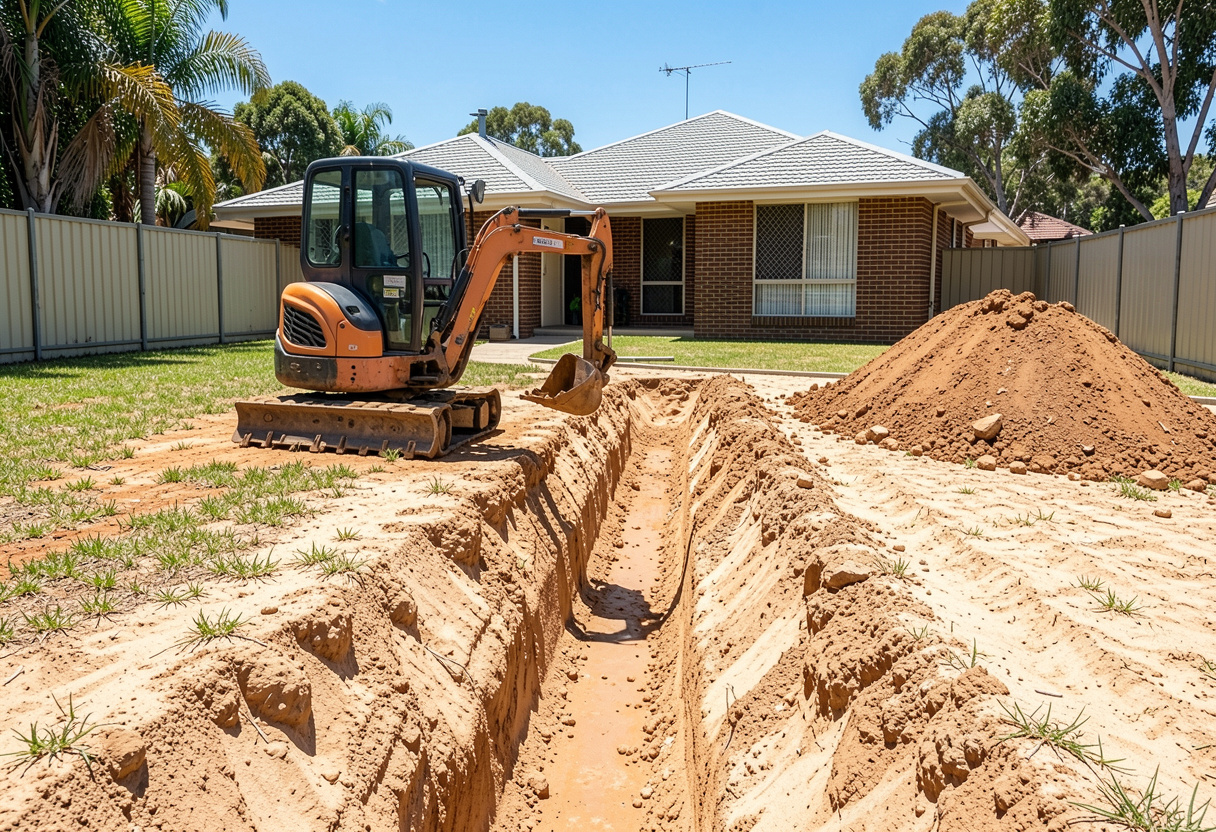
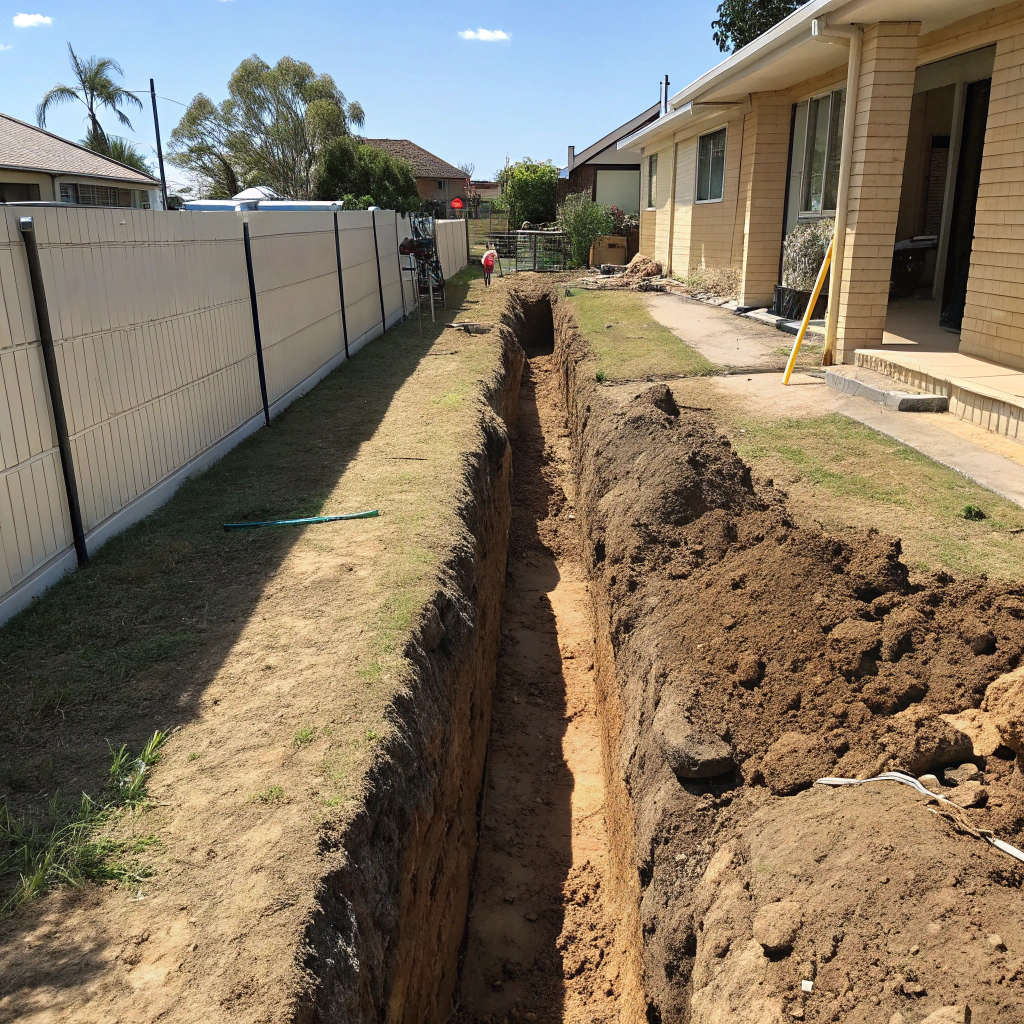
Compact excavators handle trenching in confined residential sites and areas where machinery access is limited — tight side passages, established gardens, and properties where a full-size machine simply won’t fit without causing damage.
Larger excavators take on deeper and wider trench excavation on commercial and civil projects where trench dimensions exceed what a chain trencher or compact machine can achieve efficiently.
Vacuum excavation is available for safe, non-destructive trenching in areas of known or suspected service conflicts. Rather than mechanically excavating through an area where a service strike is a real possibility, vacuum excavation removes soil without contact risk — protecting both existing infrastructure and the project timeline.
Backfilling & Compaction — Why It Matters as Much as the Dig
The trenching job isn’t finished when the services go in. How the trench gets closed up determines whether the surface above it performs the way it should — or settles, cracks, and causes problems down the track.
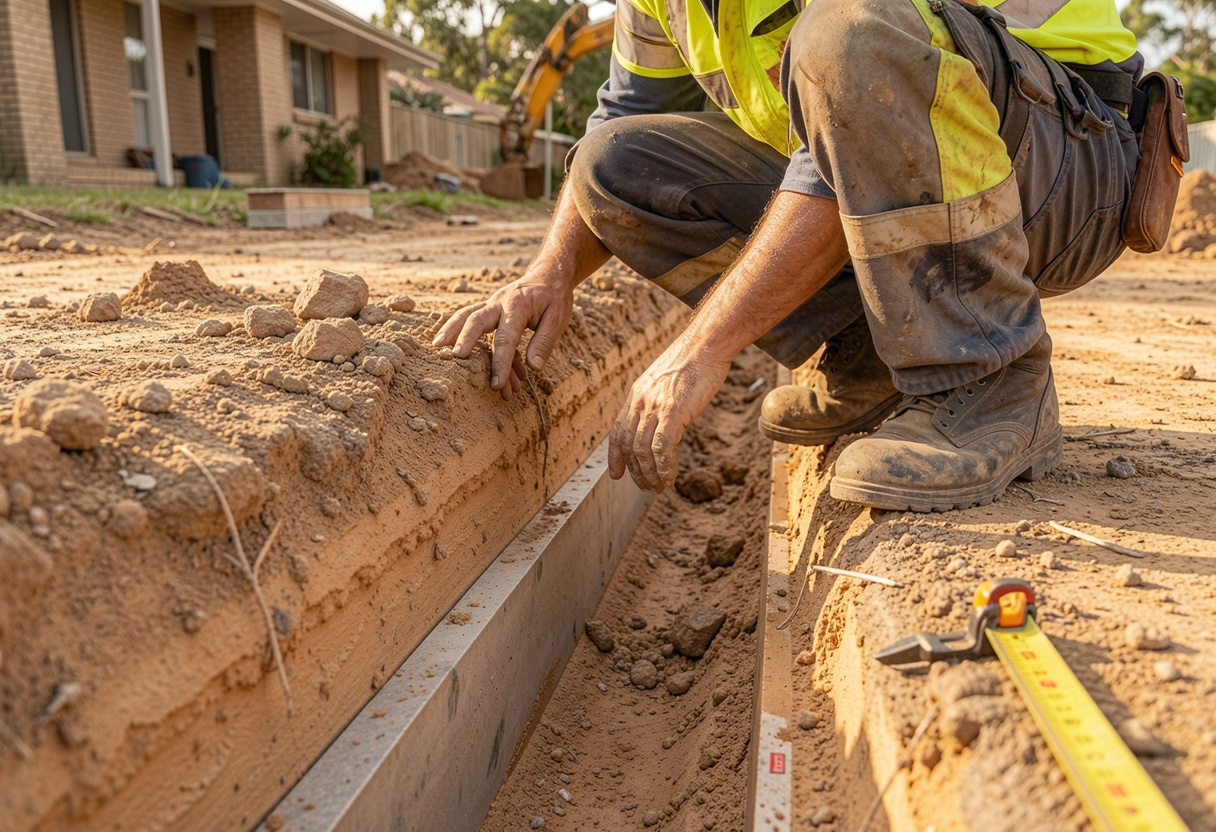
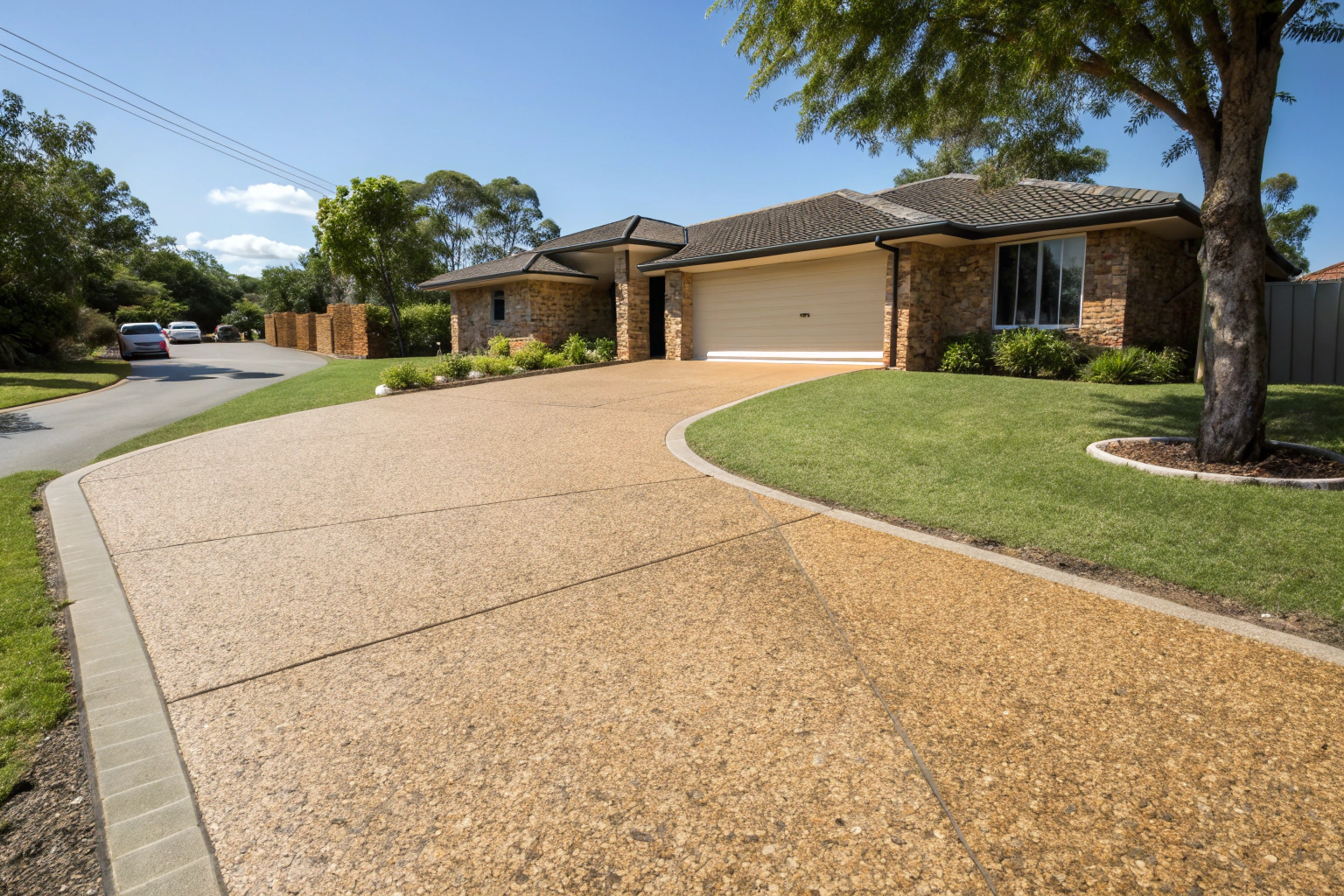
Trenches beneath driveways, pavements, and building slabs require backfill compacted to a specified standard in layers. Skip this step or rush it, and the surface above will settle unevenly over time — showing up as cracking, dipping, or trip hazards that have to be dug up and done again.
For trenches within road reserves and council footpaths, the relevant road authority or local council specifies the backfill materials and compaction standards that must be met before the road or footpath surface can be reinstated. We know these requirements for Fraser Coast projects and consistently meet them — protecting our clients from the cost and delay of failed compaction tests or reinstatement rejections.
Trenching Applications We Handle Across Hervey Bay
We handle the full range of residential and commercial trenching requirements across Hervey Bay and the Fraser Coast — from single-service residential connections through to multi-service civil trenching on larger development projects.
Irrigation System Trenching: Residential and commercial irrigation trenching for landscaping systems across Hervey Bay properties. Irrigation trenching is typically shallower than utility trenching, but still requires accurate alignment and clean trench walls to keep pipe bedding consistent and joints accessible.
Get a Free Trenching Quote for Your Hervey Bay Project
Whether you’re a homeowner in Pialba needing a sewer connection, a builder in Eli Waters pouring strip footings, a civil contractor running utility services through a Hervey Bay development, or a commercial operator on the Fraser Coast who needs reliable trench work done on time and to spec — we’re the local team to call.
We offer free trenching assessments and quotes across Hervey Bay and the broader Fraser Coast region. Get in touch today and let’s talk through what your project needs.
FAQs About Trenching in Hervey Bay
How long does a typical trenching job take on a Hervey Bay residential property?
Most standard residential trenching jobs in Hervey Bay — a single utility run, a sewer connection, or an irrigation system — are completed within a day. Longer runs across larger blocks, which are pretty common out in Eli Waters and Kawungan where block sizes are generous, might take two days depending on access and soil conditions. I always give homeowners a realistic timeframe upfront so you’re not left wondering when you can get your car back in the driveway. The sandy soils near the bay actually help us move quickly in most cases — it’s the compaction phase on the back end that we never rush.
Do I need council approval before trenching on my property in Hervey Bay?
For most trenching work happening entirely on your own property — like an irrigation line or a private drainage connection — you generally won’t need a Fraser Coast Regional Council permit. Where approval becomes necessary is when the trench crosses the road reserve, connects to a council-maintained sewer or stormwater main, or involves a new water service connection through Queensland Urban Utilities. I always check this before we start rather than assuming, because getting it wrong means digging up finished work. It’s a straightforward process and we can point you in the right direction if approvals are needed.
Will trenching through my yard damage my lawn or garden?
Honestly, some surface disruption is unavoidable — a trench has to go somewhere, and that usually means cutting through grass or garden beds. What we do control is how we manage it — stripping turf carefully where it can be relaid, keeping the spoil contained, and leaving the site as tidy as possible once backfilling is done. In Hervey Bay’s climate, lawn recovers reasonably quickly through the warmer months if the soil is put back properly and compacted in layers. I’d rather be upfront about this than promise zero impact and leave you with a surprise.
How much does trenching cost in Hervey Bay?
Trenching pricing in Hervey Bay varies depending on trench length, depth, soil conditions, and access constraints on your specific site. A short shallow irrigation trench on an open residential block is a very different job to a deep sewer connection through sandy coastal soil in a tight side passage. I don’t quote blind from a rate per metre because that approach ignores the variables that actually drive cost — and it’s how people end up with quotes that blow out. The best thing to do is get us out for a free assessment so the quote reflects what’s actually in front of us.
Can you trench near existing tree roots without causing major damage?
Yes, but it needs to be approached carefully, and vacuum excavation is often the right call when significant root systems are in play. A lot of established Hervey Bay properties — particularly older homes in Urangan and Pialba — have mature trees with root systems that extend well beyond where you’d expect. Mechanical trenching through a significant root zone can destabilise a tree and create liability issues you don’t want. I’d rather take the slower, safer approach near tree roots than save an hour and cause a problem that costs far more to fix.
What happens if you hit rock during trenching in Hervey Bay?
Hard rock is not a common issue across most of Hervey Bay’s coastal and low-lying areas — the soils here tend to be sandy, silty, or clay-based rather than rocky. Where you can occasionally encounter harder material is on elevated sites further inland on the Fraser Coast, or where old concrete, rubble, or dense clay layers are present beneath the surface. If we hit something unexpected mid-trench, I’ll stop, show you what we’ve found, and talk through the options before proceeding — there are no surprise invoices for conditions we didn’t flag with you first. It’s just the honest way to run a job.
