
Foundation Excavation That Meets Engineering Standards Every Time
Talk to any builder on the Fraser Coast who’s had a foundation excavation go wrong, and they’ll tell you the same thing — fixing it after the concrete’s poured isn’t an option. Foundation excavation isn’t general earthworks. It’s precision work that has to hit exact depths, exact widths, and land on competent bearing material every single time. Get that wrong and you’ve got a structural problem built into the building before the frame even goes up.
We’ve been doing foundation excavation in Hervey Bay long enough to know that local ground conditions — sandy coastal soils near the bay, reactive clay across parts of the Fraser Coast, shallow groundwater in low-lying areas — don’t forgive sloppy work. Every engineer spec we receive gets read properly. Every dig gets set out from survey control. And every bearing surface gets assessed before we call it done.
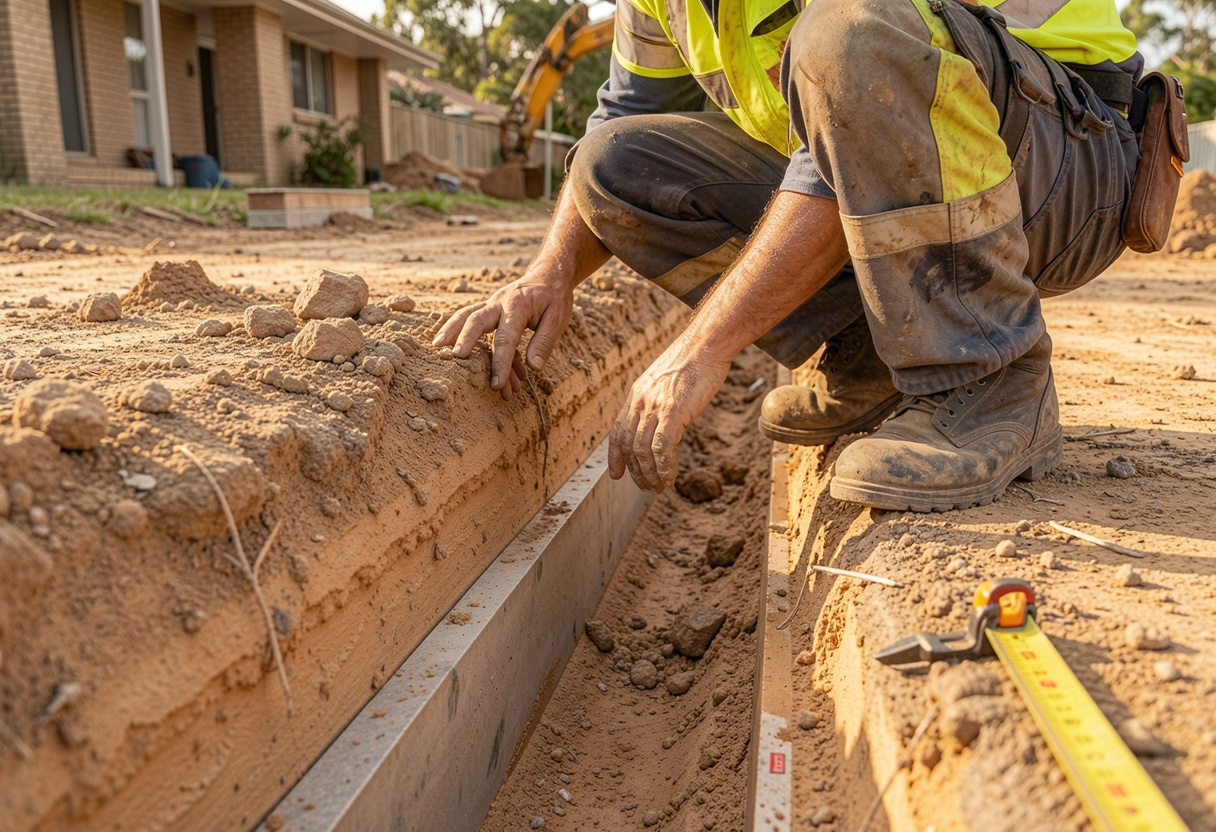

What Quality Foundation Excavation Actually Involves
Foundation excavation done properly isn’t just digging to a number on a drawing. There’s a sequence of steps that has to happen right — from reading the engineer’s documentation before a single bucket goes in the ground, through to handing over a trimmed, assessed bearing surface that’s ready for reinforcement and concrete.
Hervey Bay and Fraser Coast Ground Conditions — What We're Working With
Sandy Coastal Soils Near the Bay
Coastal soils are often loose and may require deeper excavation or engineered fill to reach suitable bearing material. Proper assessment ensures the foundation performs as intended.
Reactive Clay Soils
Clay-heavy areas expand and contract with moisture changes. Protecting exposed foundation surfaces and minimising delays is critical to maintaining stable bearing conditions.
Shallow Groundwater
In low-lying areas, groundwater can affect excavation depth and conditions. Effective dewatering may be required to keep the project on track and ensure a solid foundation.
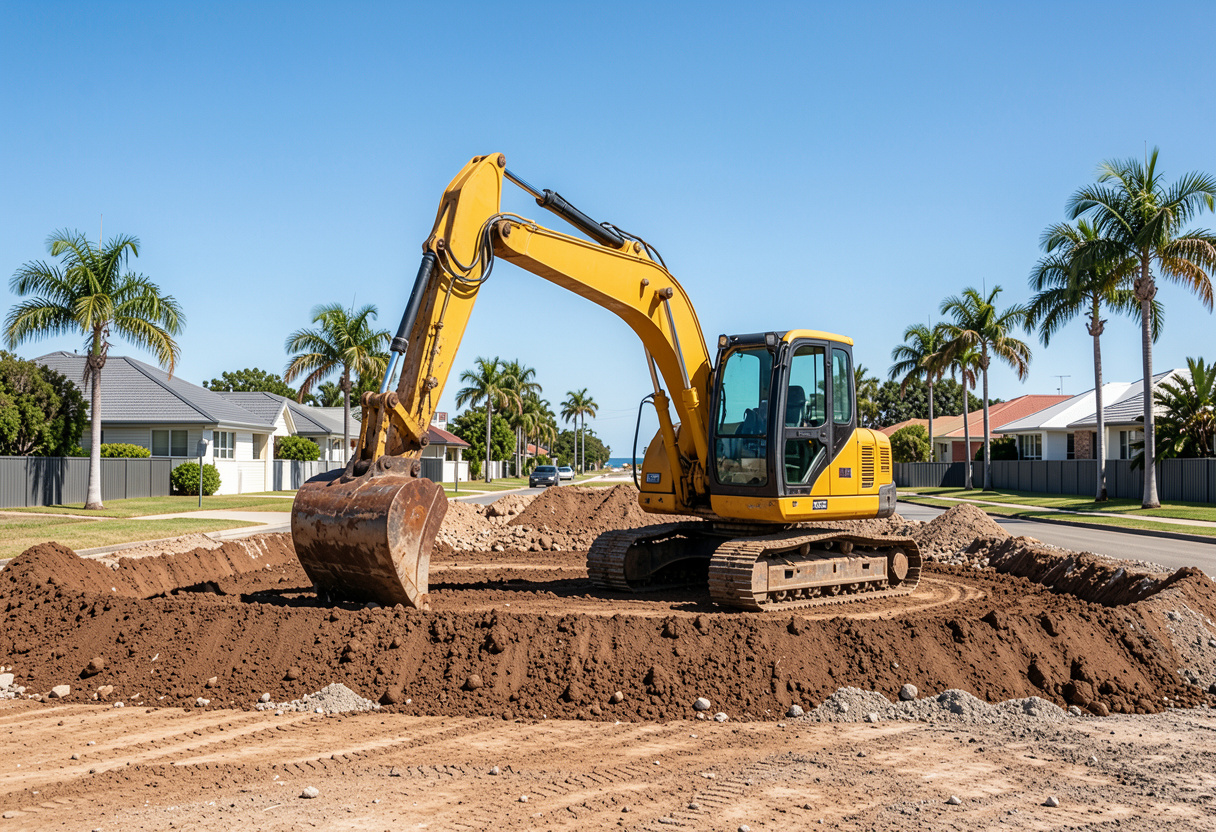
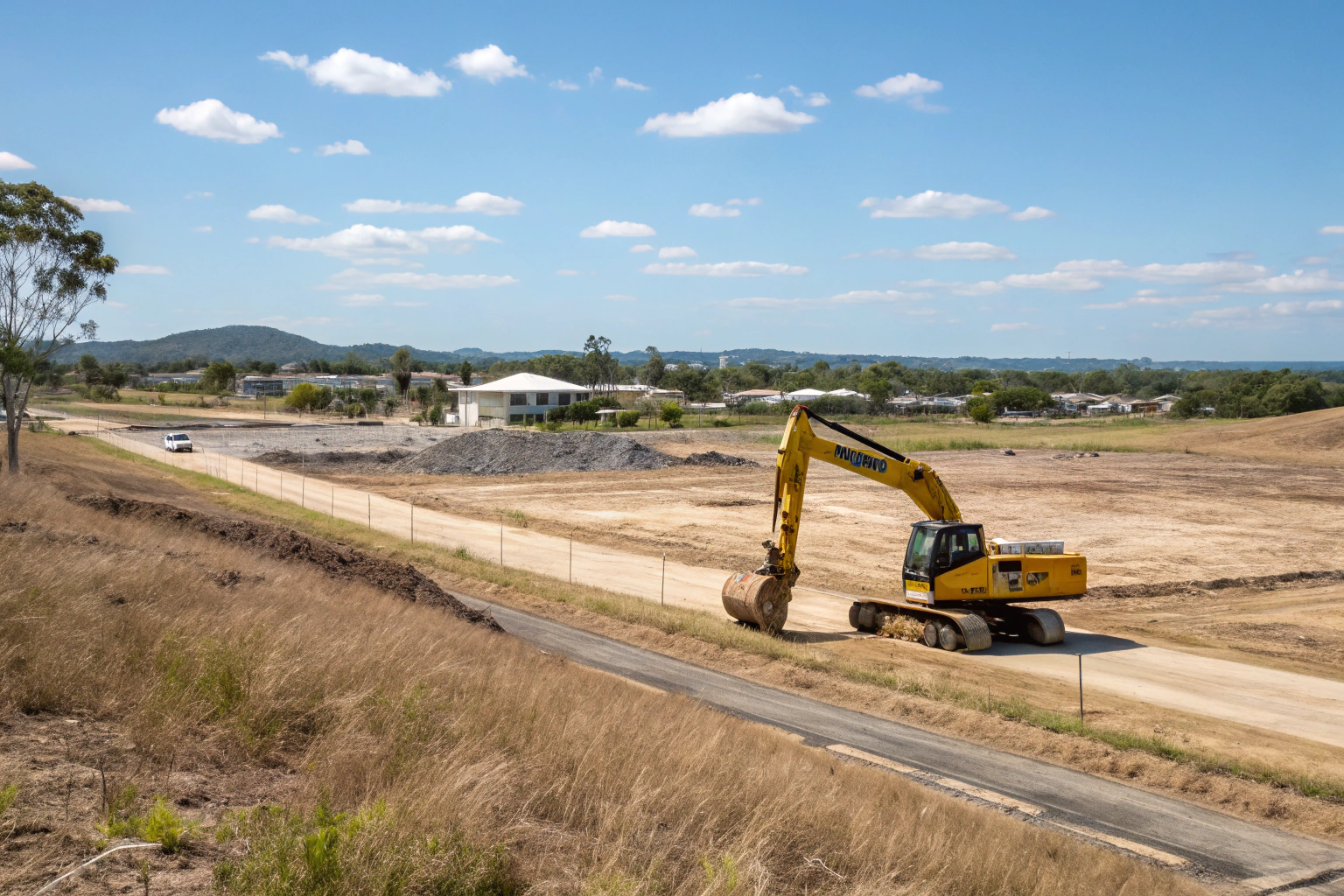
Foundation Excavation Services We Handle Across Hervey Bay
Strip Footing Excavation: Excavation for wall and frame construction, completed to engineer specifications with clean, stable bearing surfaces ready for concreting.
Pad Footing Excavation: Accurately positioned excavations for post and column bases, ensuring precise dimensions and level bearing surfaces.
Pier Excavation: Specialised excavation for bored pier foundations, requiring precise depth and placement for challenging ground conditions or higher load demands.
Raft Slab Subgrade Preparation: Preparation of subgrade to correct levels and bearing conditions, ready for residential slab construction.
Commercial and Industrial Foundation Excavation: Large-scale excavation requiring advanced equipment, strict tolerances, and coordination with engineers and project teams.
How the Foundation Excavation Process Works
From the first conversation through to a completed and inspected excavation, here’s what working with us on a foundation excavation project looks like:
Get Your Foundation Excavation Sorted Early
The best time to talk to us about foundation excavation is before construction starts — not after you’ve got a certifier on site waiting for an excavation that’s either behind schedule or off spec.
If you’re a builder, owner-builder, or developer working on a project across Hervey Bay or the Fraser Coast region, get in touch for a foundation excavation assessment and quote. We’ll review your engineer drawings, give you a clear picture of what the job involves in your specific ground conditions, and put a price on it that reflects the precision and compliance requirements the work actually demands.
Call us or submit a quote request online — and let’s get your foundations started on solid ground.
FAQs About Foundation Excavation in Hervey Bay
How long does foundation excavation take on a typical Hervey Bay residential build?
For a standard residential strip footing job in Hervey Bay, most foundation excavations are completed in a day — sometimes two if the site has access challenges or the ground conditions throw something unexpected at us. Sandy coastal soils near the bay tend to dig quickly, while clay-heavy sites inland can slow things down a little depending on conditions. I always factor in time for bearing assessment and surface preparation, because rushing that final step is where programs come unstuck. Get in touch early and I can give you a realistic timeframe based on your specific site and engineer drawings.
How much does foundation excavation cost in Hervey Bay?
Honestly, the price varies quite a bit depending on foundation type, site conditions, and how much coordination is involved with engineers and certifiers. A straightforward strip footing excavation on a flat Hervey Bay residential site is going to cost less than a pier excavation job on a low-lying block with groundwater management involved. I don’t quote off square meterage alone — I review the engineer drawings first so the price actually reflects the job. Reach out with your drawings and I’ll put together a proper number.
Do I need a geotechnical report before you can quote on foundation excavation?
It’s not a hard requirement to get a quote started, but having the geotech report makes the quote a lot more accurate and a lot more useful to you. Hervey Bay’s ground conditions vary — sandy soils near the water, reactive clay in some inland areas, shallow water tables in low-lying suburbs — and the geotech report tells me what I’m likely to encounter at depth. Without it, I’m making educated guesses on bearing conditions, and that’s not good for either of us. If you don’t have one yet, your engineer or building designer can organise it before construction kicks off.
What happens if you hit unsuitable bearing material or something unexpected during the dig?
I stop, assess it, and notify the engineer — simple as that. In Hervey Bay’s coastal environment it’s not unusual to encounter loose sandy layers or soft material at the nominated design depth that doesn’t meet the bearing requirements the engineer specified. Pouring concrete onto unsuitable material because it’s faster or more convenient isn’t something I’m willing to do. The engineer makes the call on how to proceed — whether that’s going deeper, using engineered fill, or redesigning the footing — and we go from there.
Can you do foundation excavation work during Hervey Bay's wet season?
Yes, but wet season does introduce some additional considerations that are worth planning around. Heavy summer rainfall can soften exposed clay bearing surfaces quickly, which is why I don’t leave an excavation open for days between dig and concrete placement on reactive soil sites around the Fraser Coast. Low-lying blocks in parts of Hervey Bay can also see groundwater levels rise during the wet, which may require dewatering on some jobs. I’d rather be upfront about those conditions at quoting stage than have it catch the builder off guard mid-program.
Do I need to be on site during the foundation excavation?
You don’t have to be there the whole time, but it’s worth being contactable. On most Hervey Bay residential builds, the builder or owner-builder doesn’t need to stand over the excavation — I work from the engineer drawings and we crack on. That said, if I hit something unusual at depth or the bearing assessment raises a question for the engineer, I need to be able to reach someone quickly rather than the job sitting idle waiting for a callback. I keep communication straightforward and flag anything worth knowing as soon as it comes up.
